



Christine König Galerie curated by Max Dax
„Presence of an Absence“
www.christinekoeniggalerie.com
Curator(s):
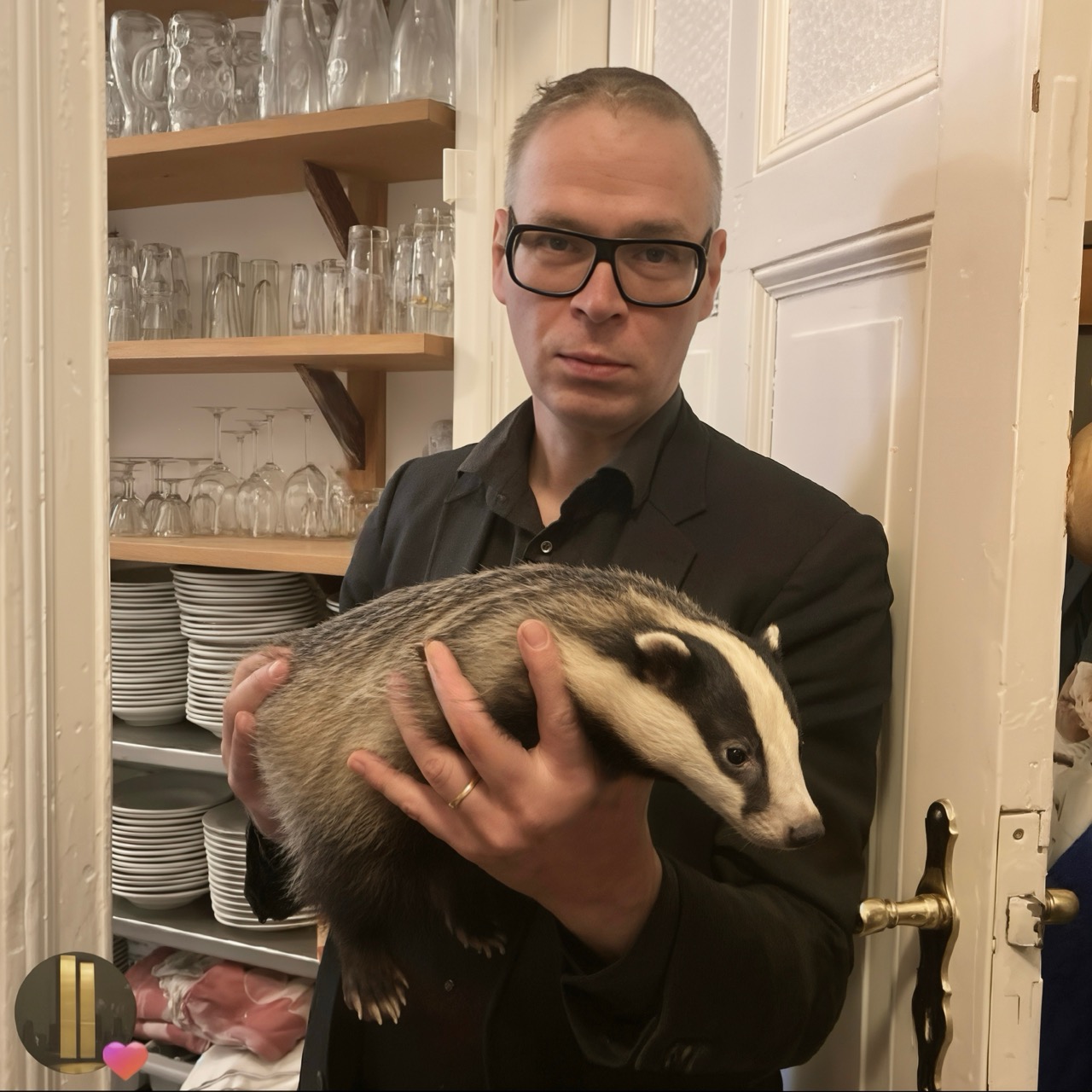
Max Dax, *1969, is a curator and writer who explores the tension between art, music, and popular culture. His group exhibitions HYPER! – A Journey into Art and Music (2019) at Deichtorhallen Hamburg, Black Album / White Cube (2021) at Kunsthal Rotterdam, as well as numerous solo exhibitions with, among others, Thomas Scheibitz, Radenko Milak, Bettina Scholz, Max Frintrop, Armin Linke, Alexander Kluge, Emil Schult, Caroline von Grone, and Lucia Margarita Bauer, are shaped by a deep desire for knowledge and reflection. In his work, the artist conversation plays a central role: as a dialogic tool that serves both research and mediation.
Artist(s):
-
1953 geboren in Stuttgart
2005 gestorben in Stuttgart
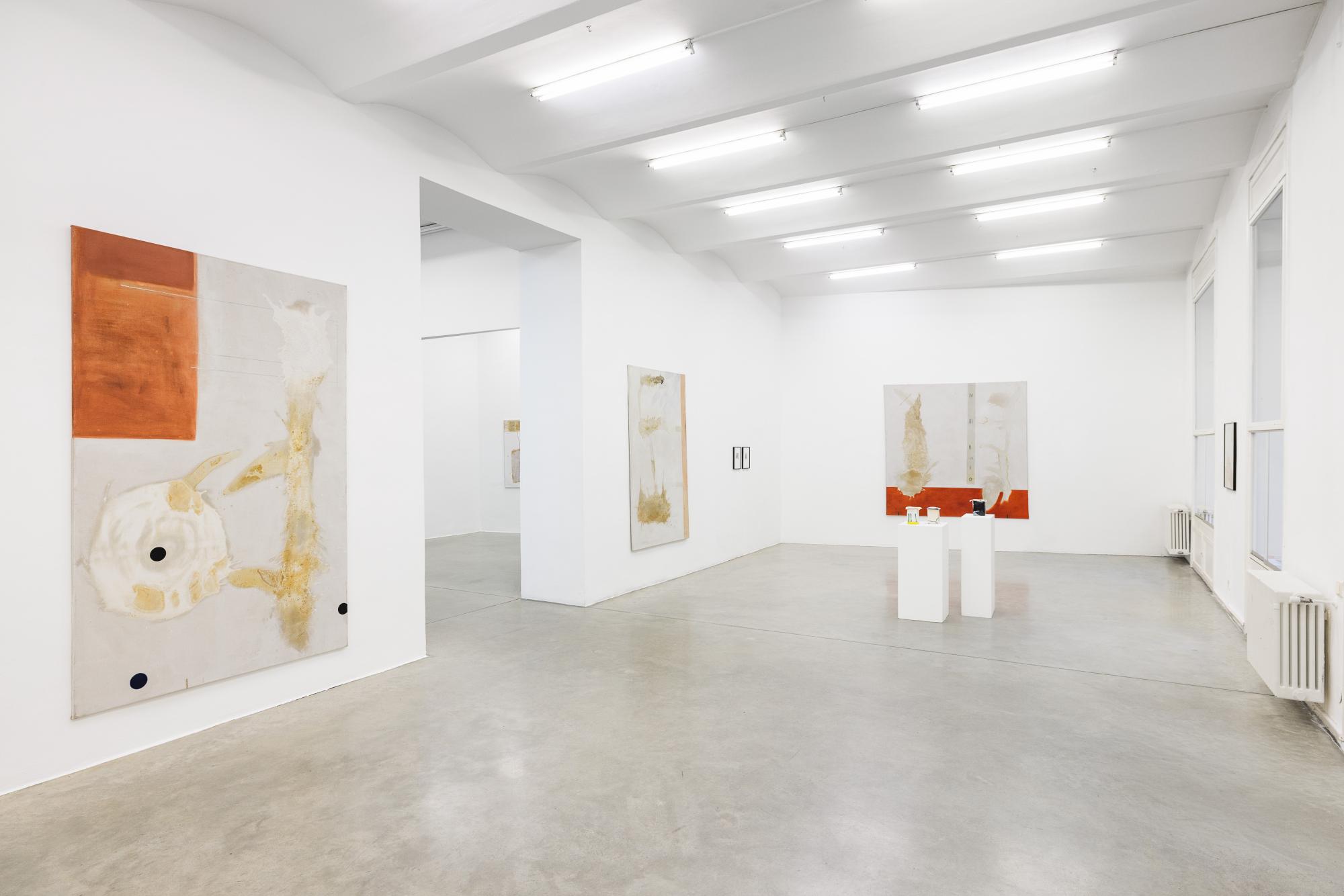
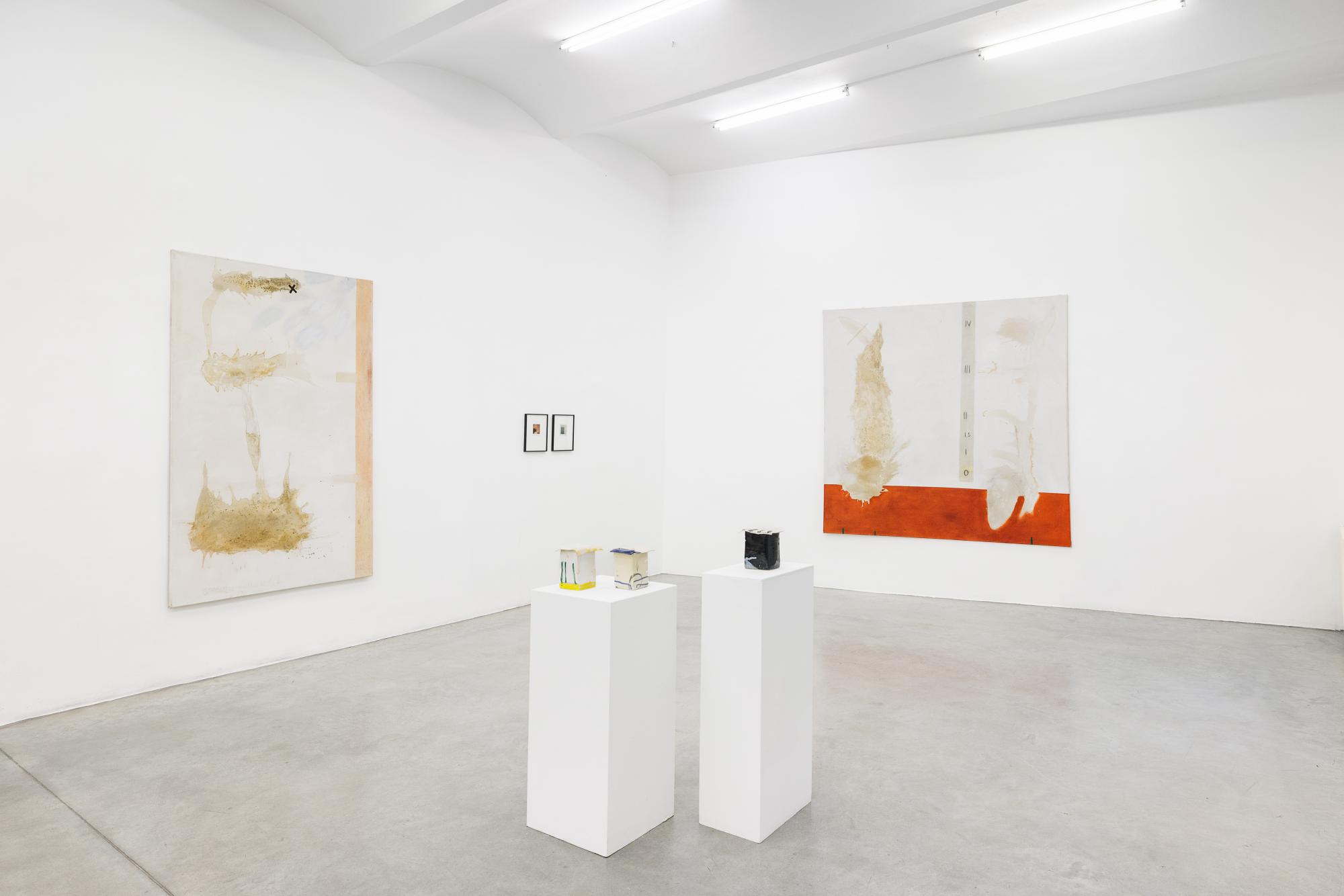
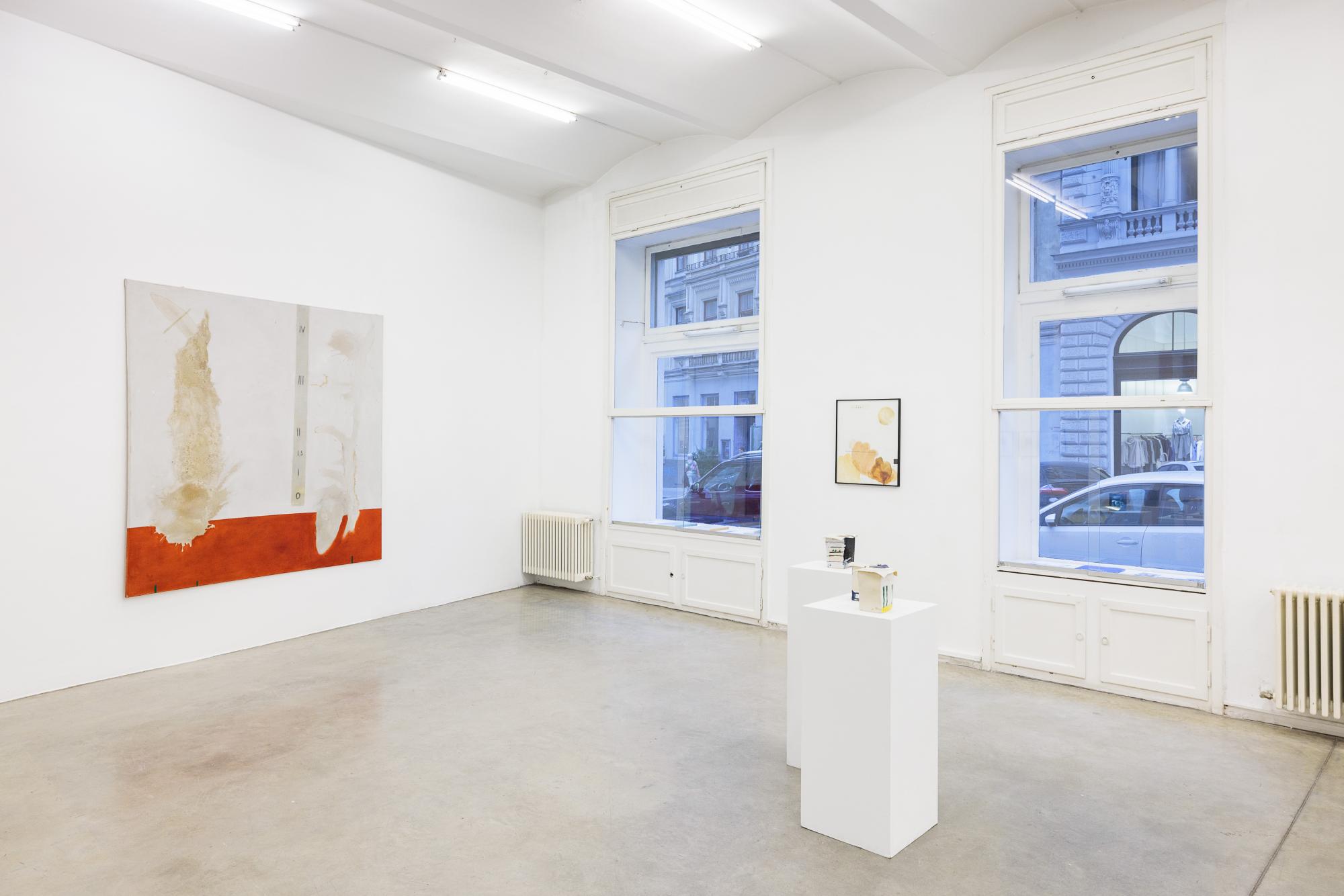
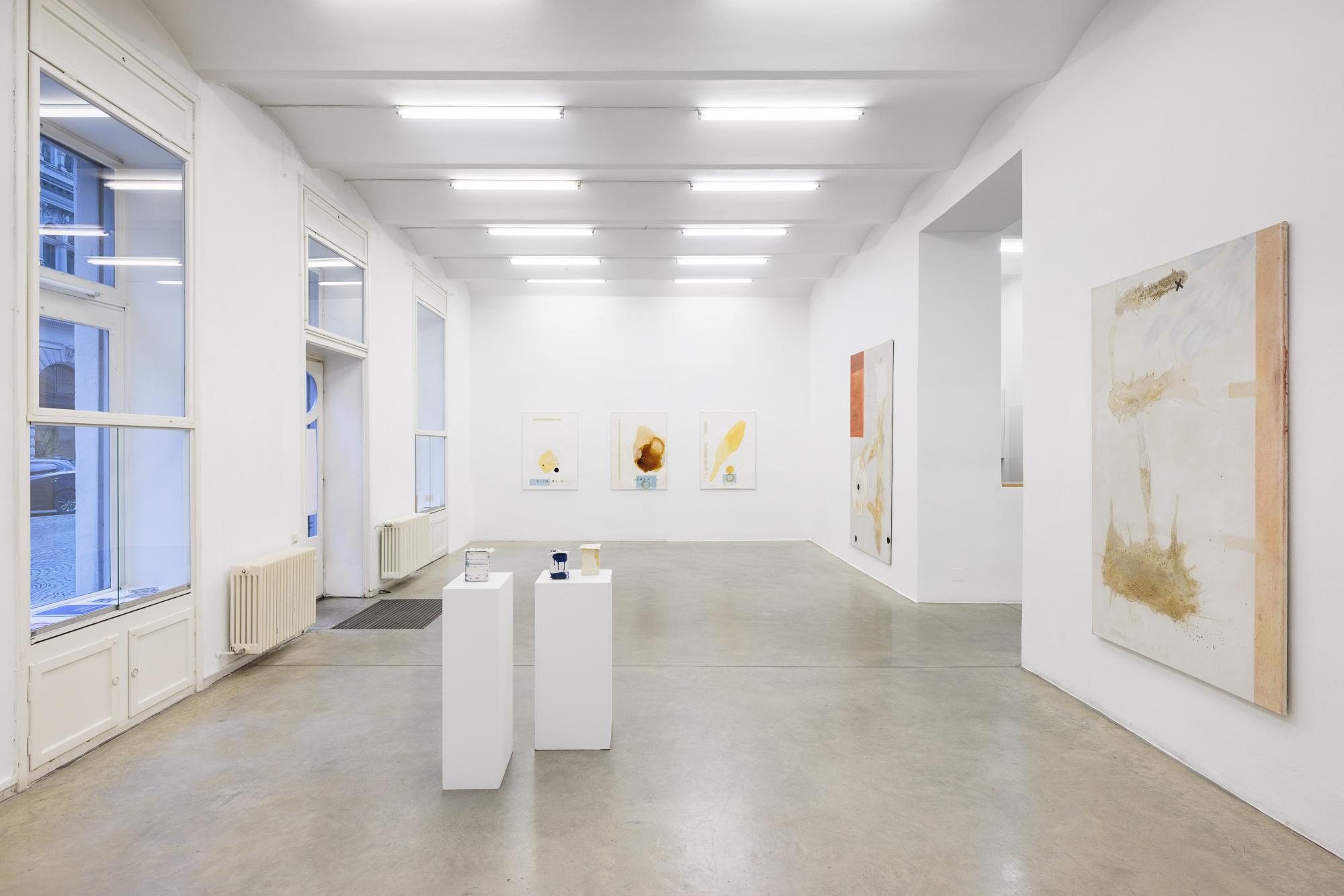
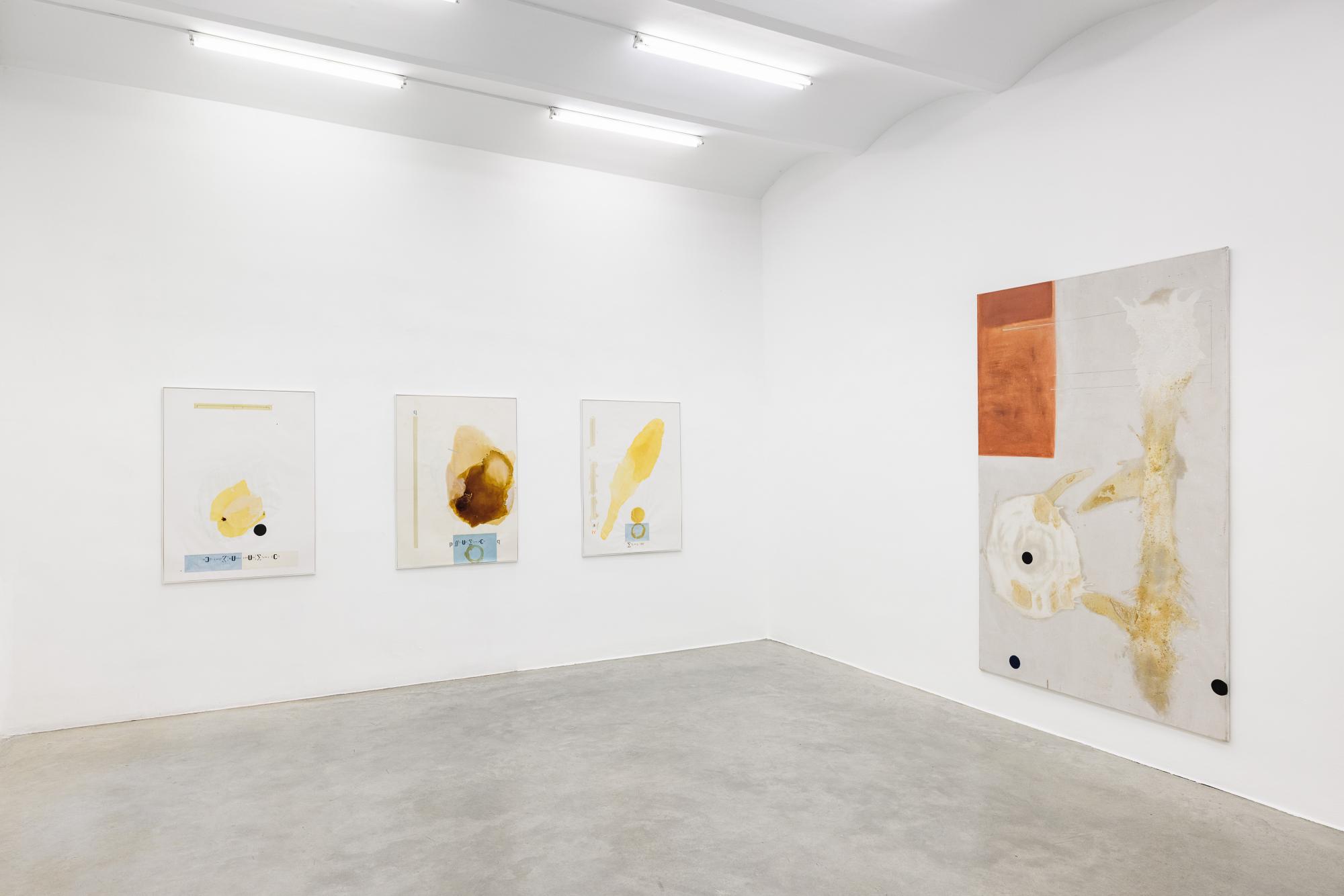
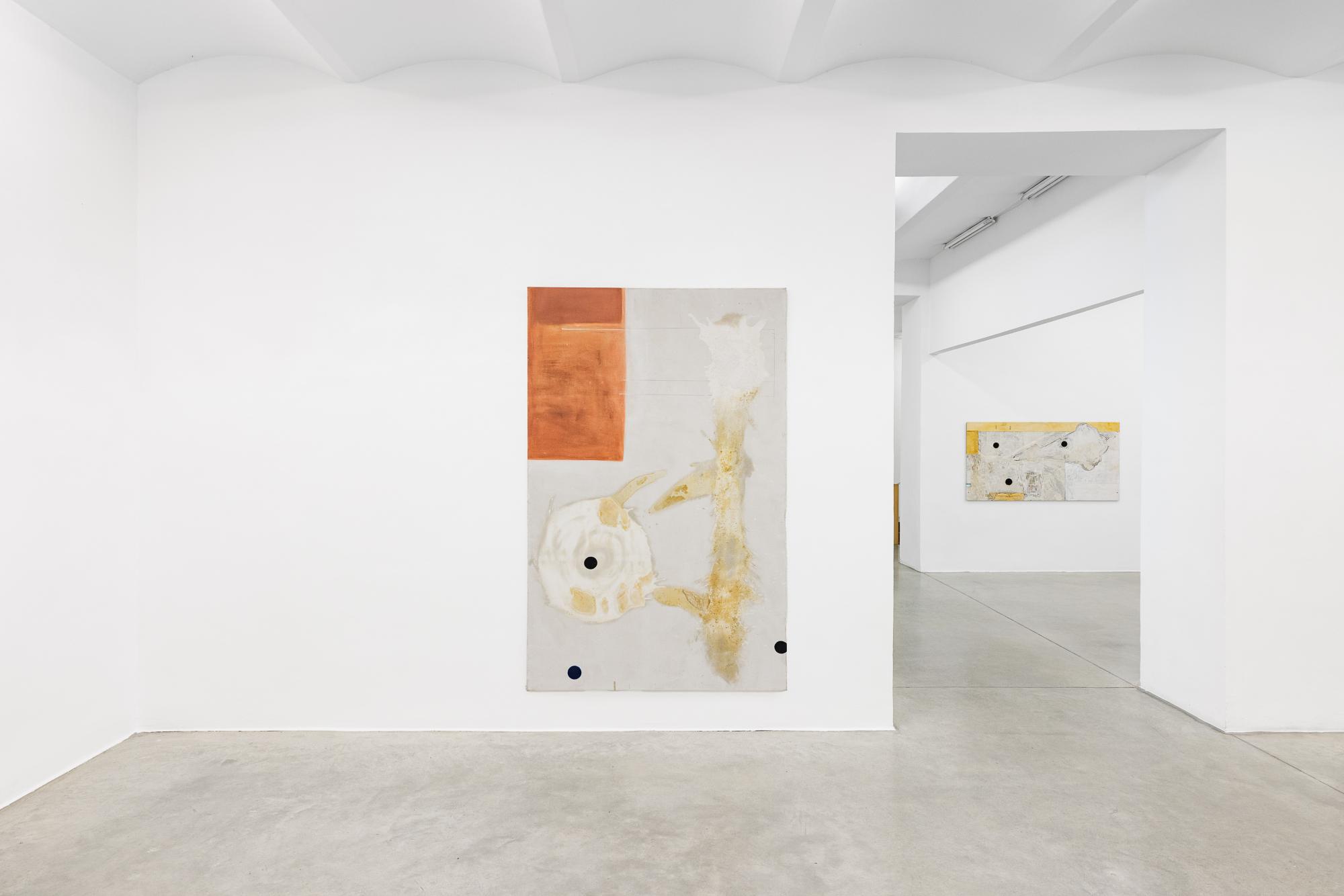
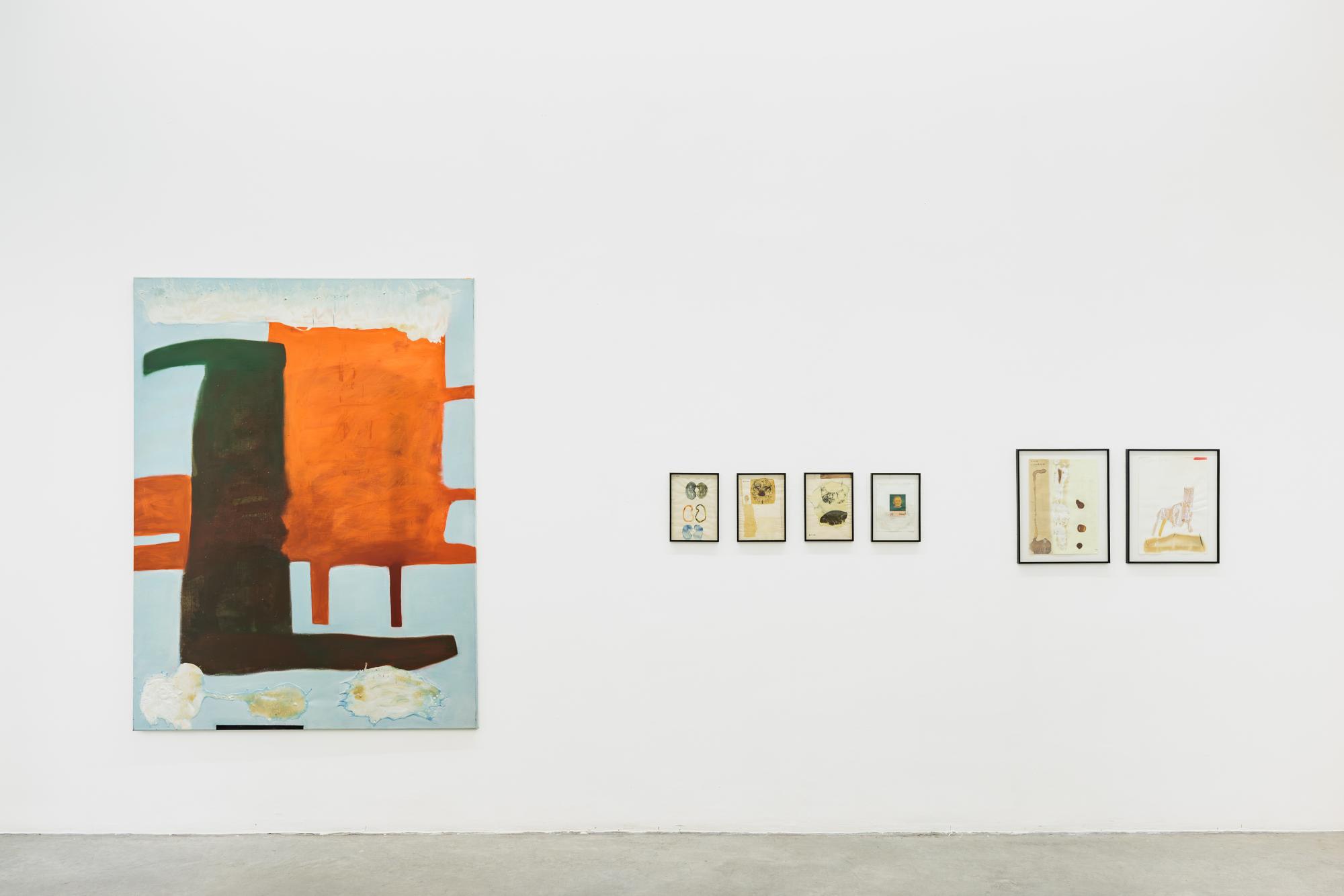
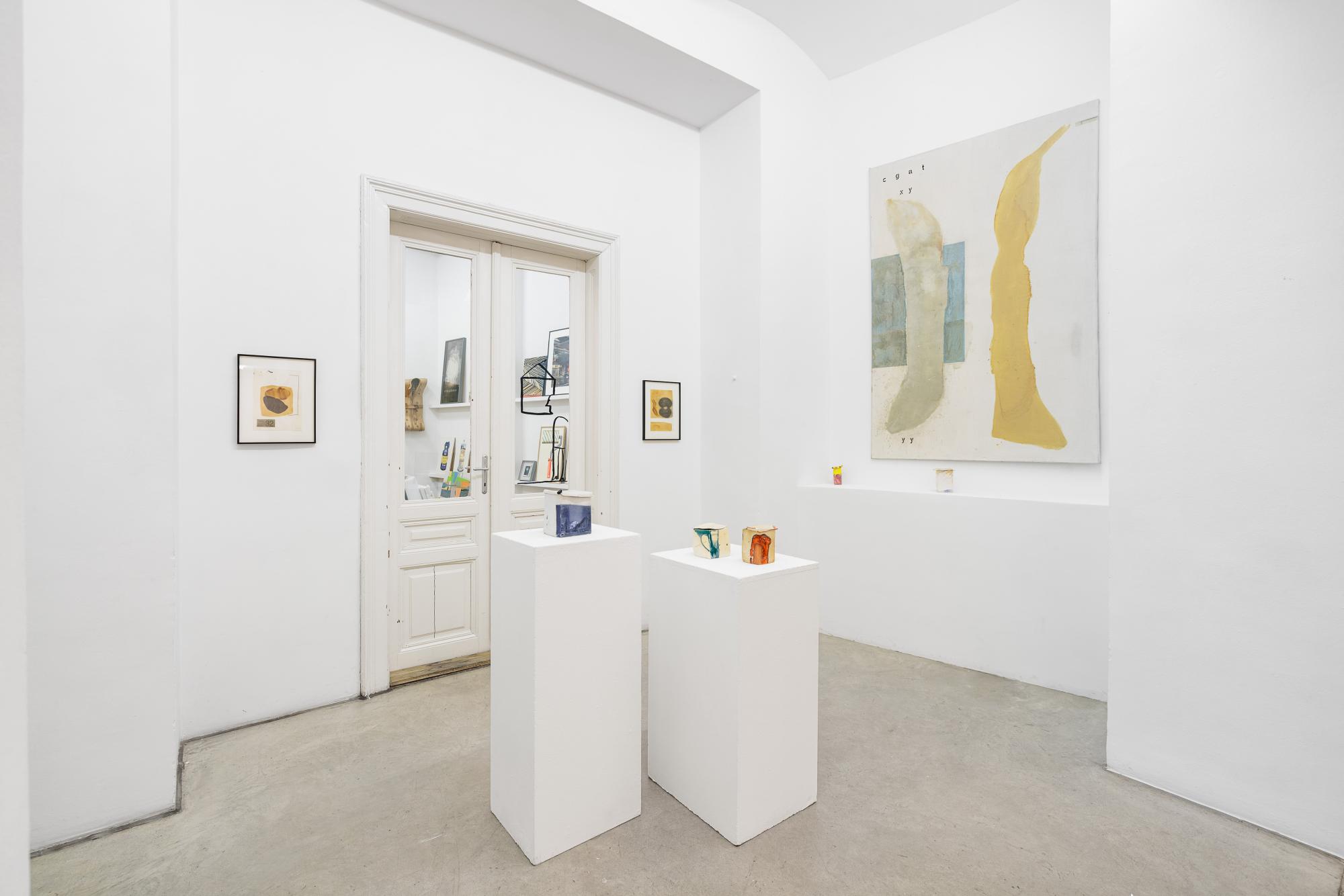
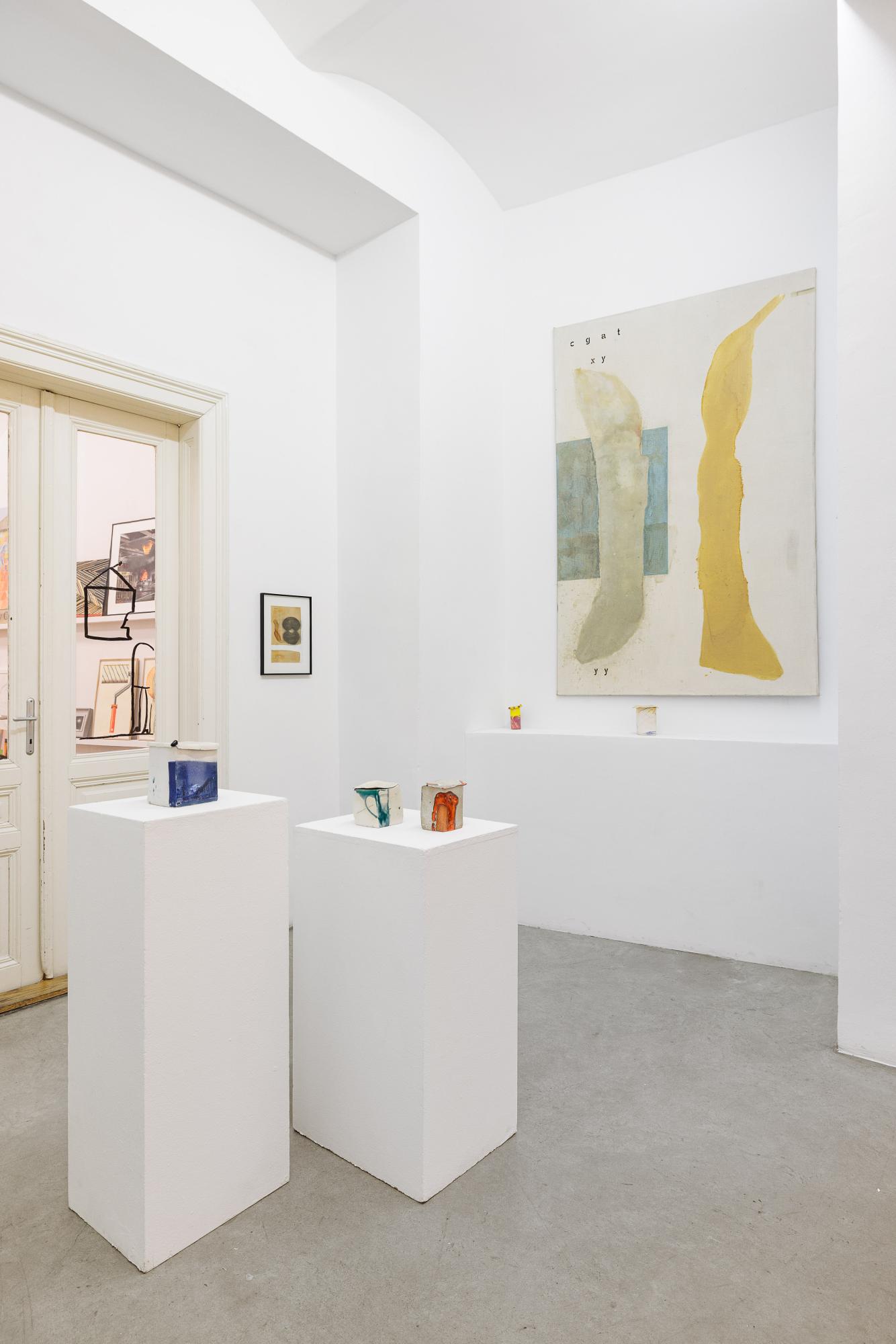
Christine König Galerie (Vienna) is delighted to announce Presence of an Absence, an exhibition of works by the painter Sabine Reuter, who died in 2005, curated by Max Dax as part of curated by (11 September–14 November 2026).
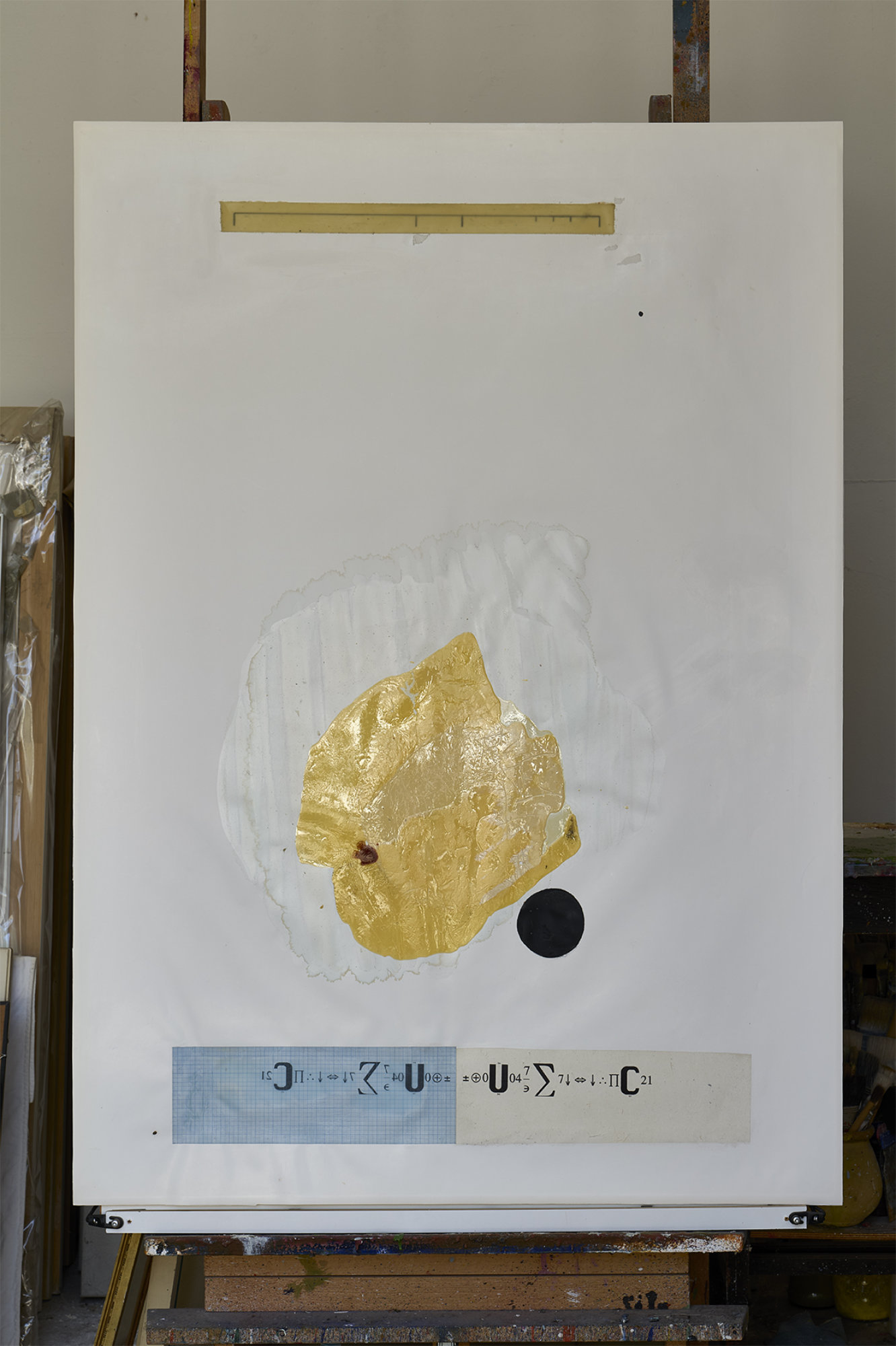
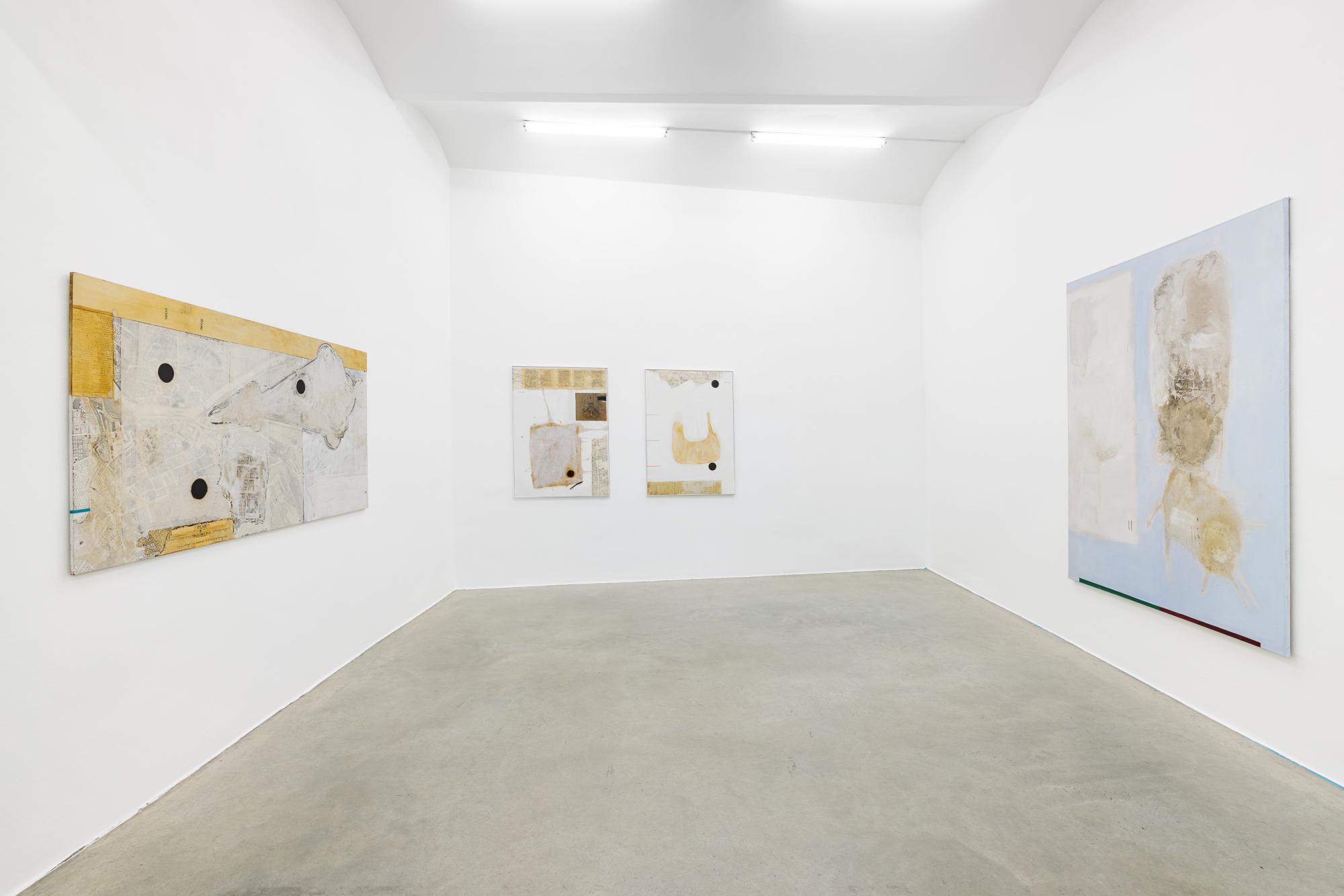
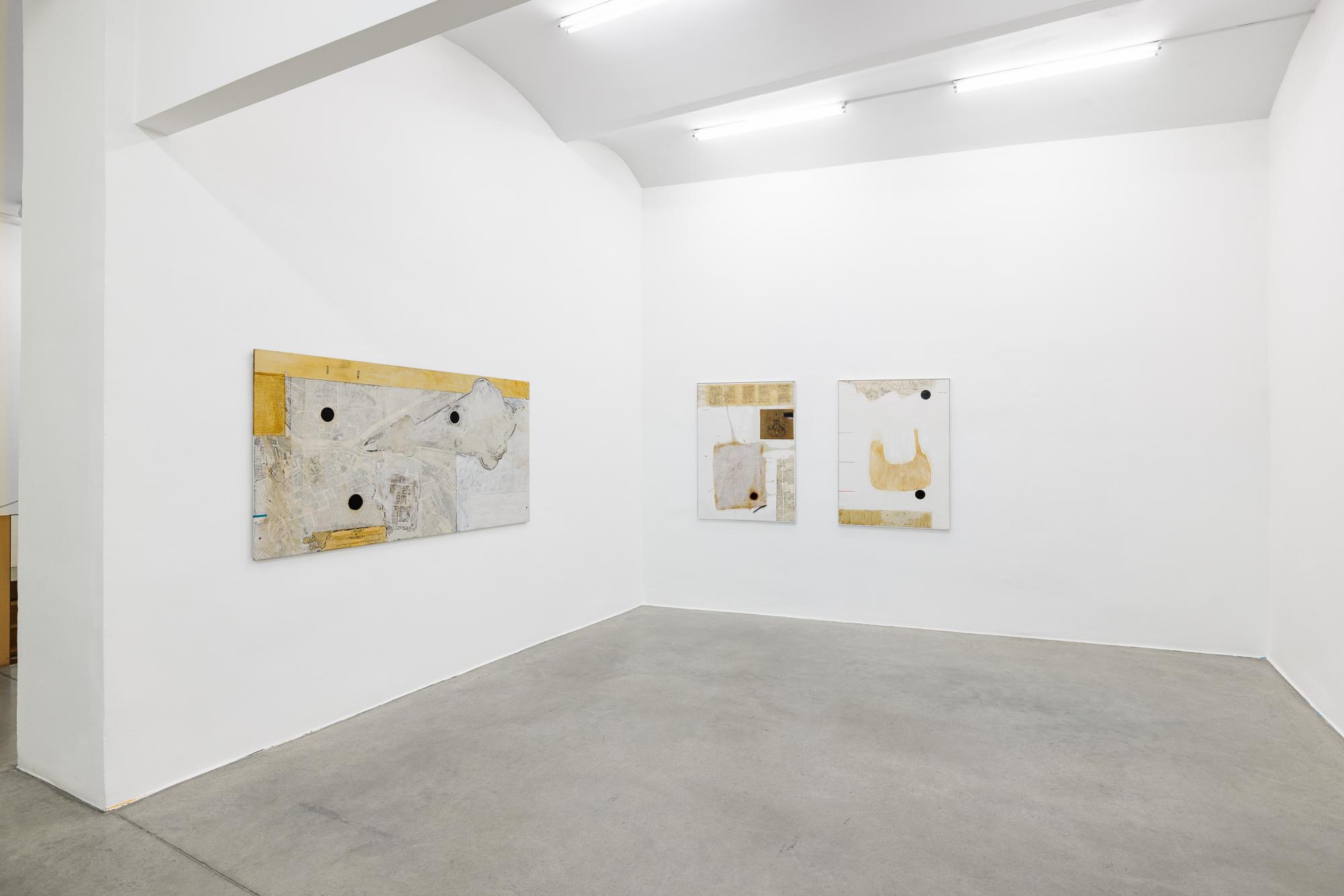
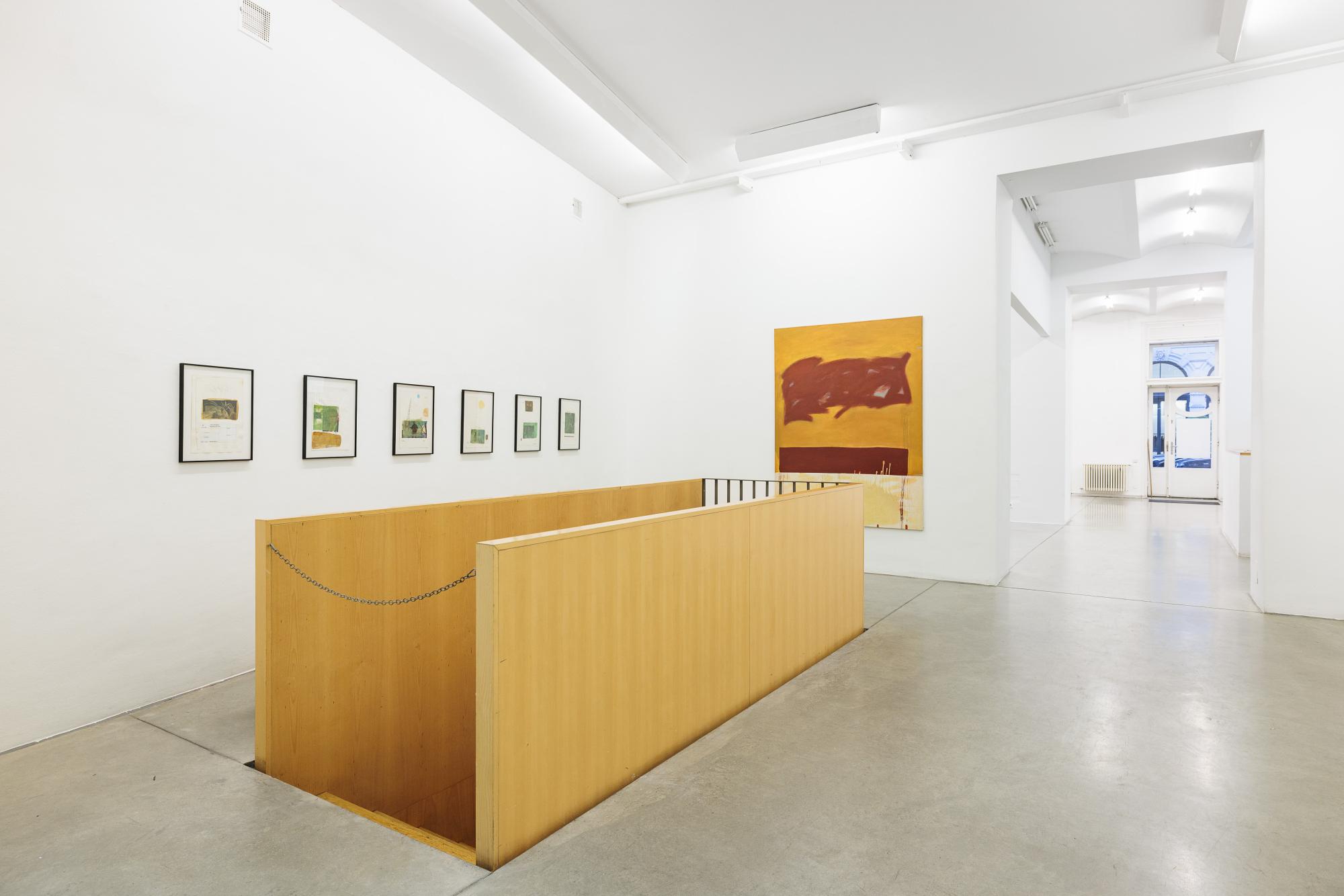
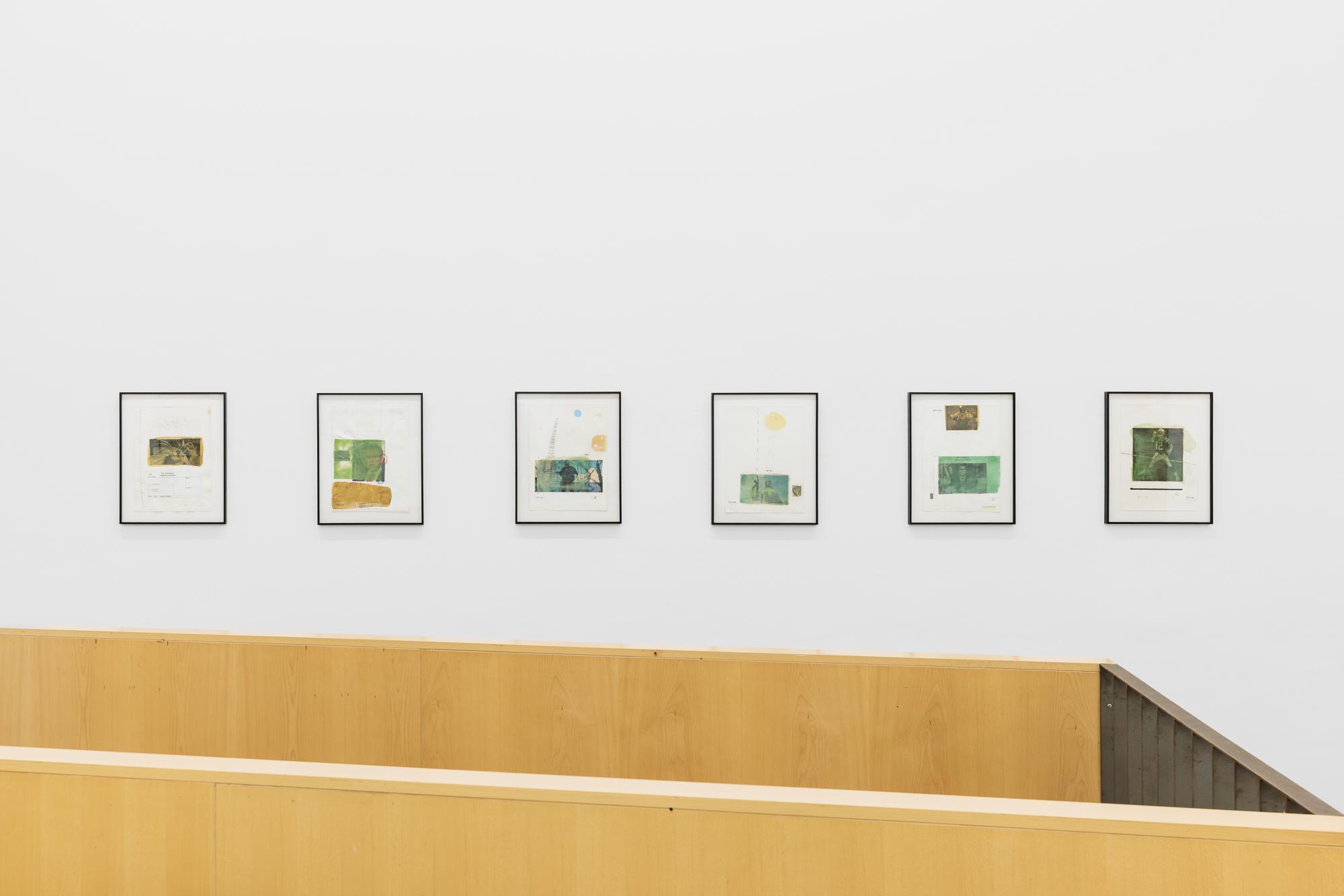
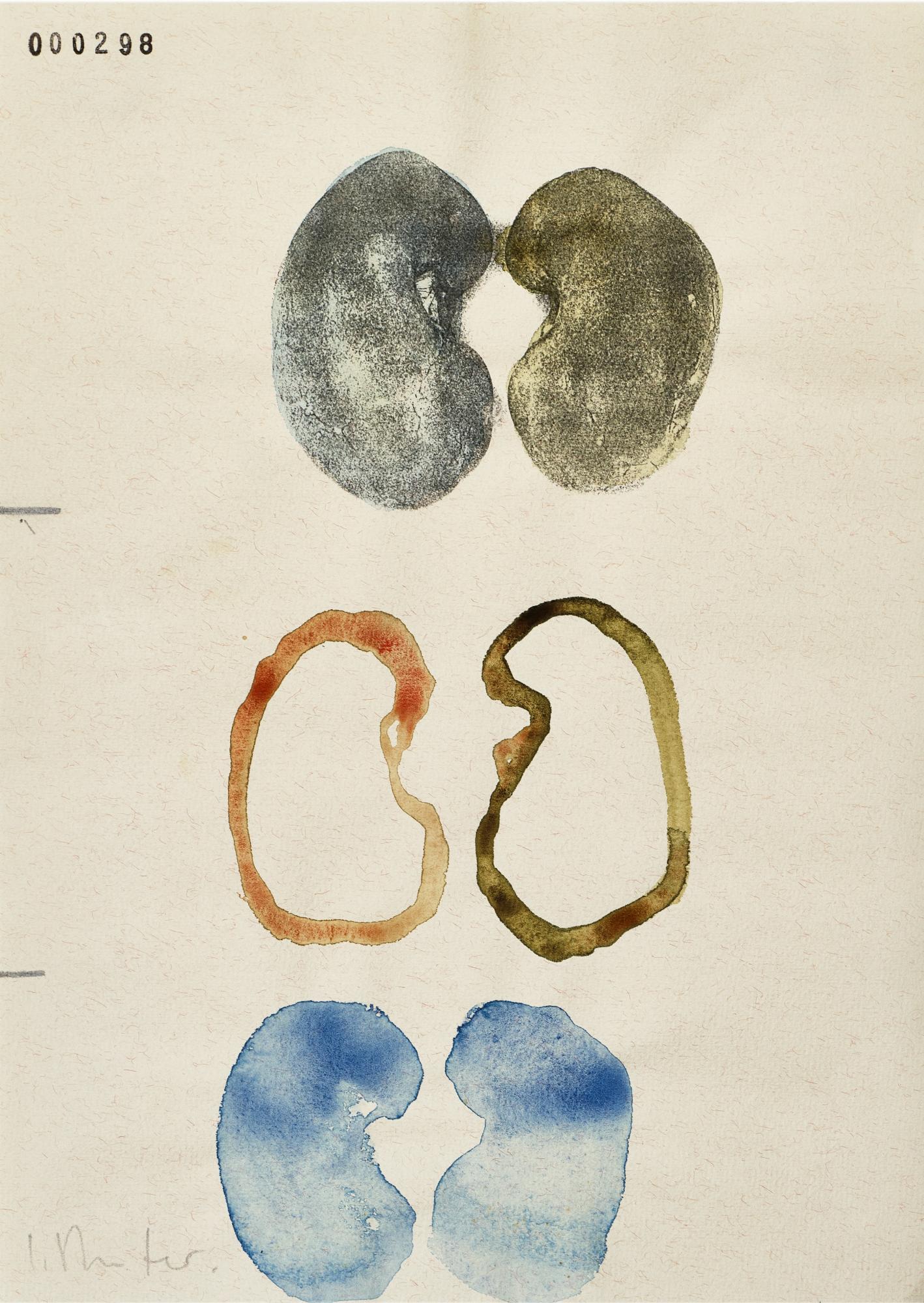
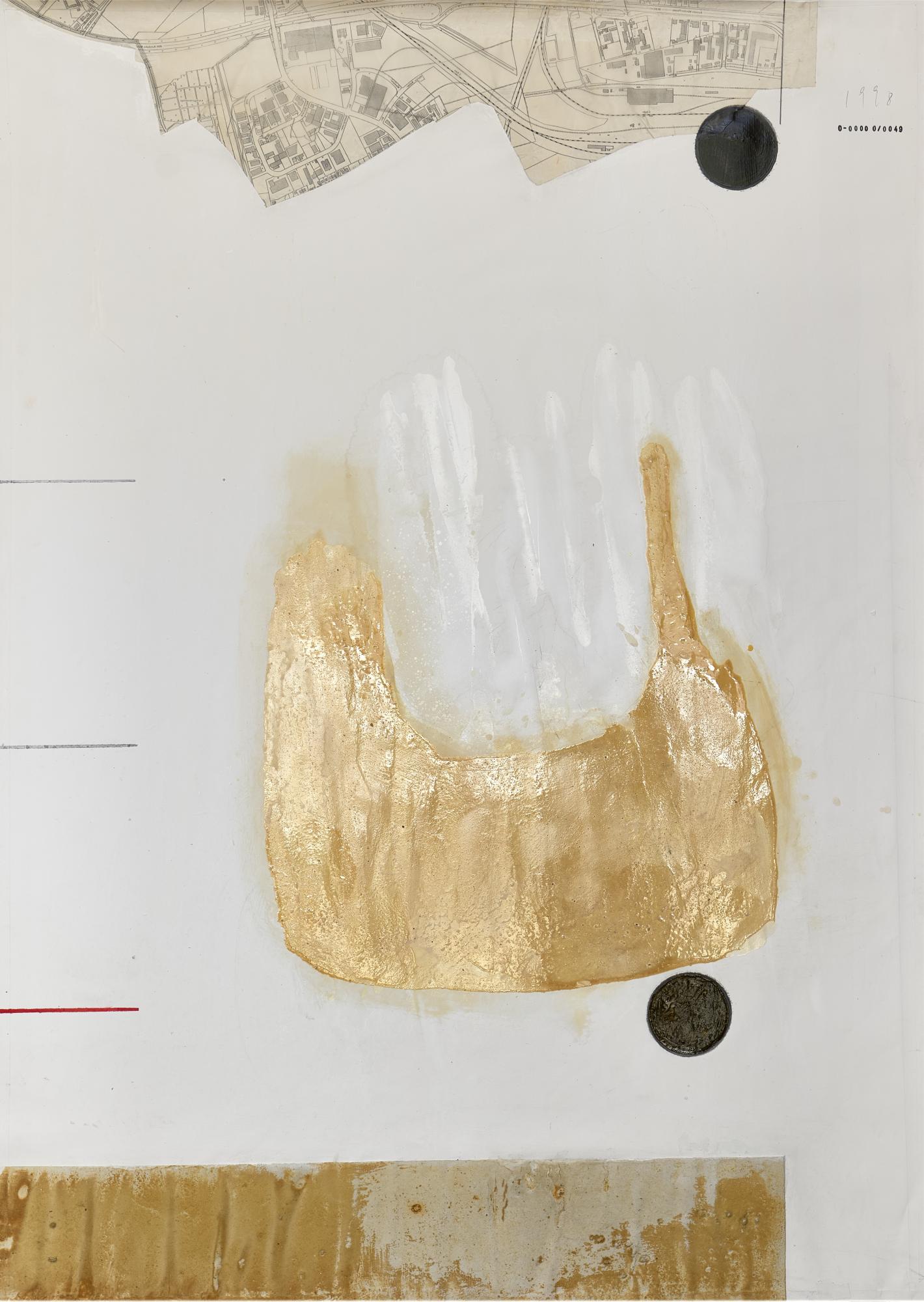
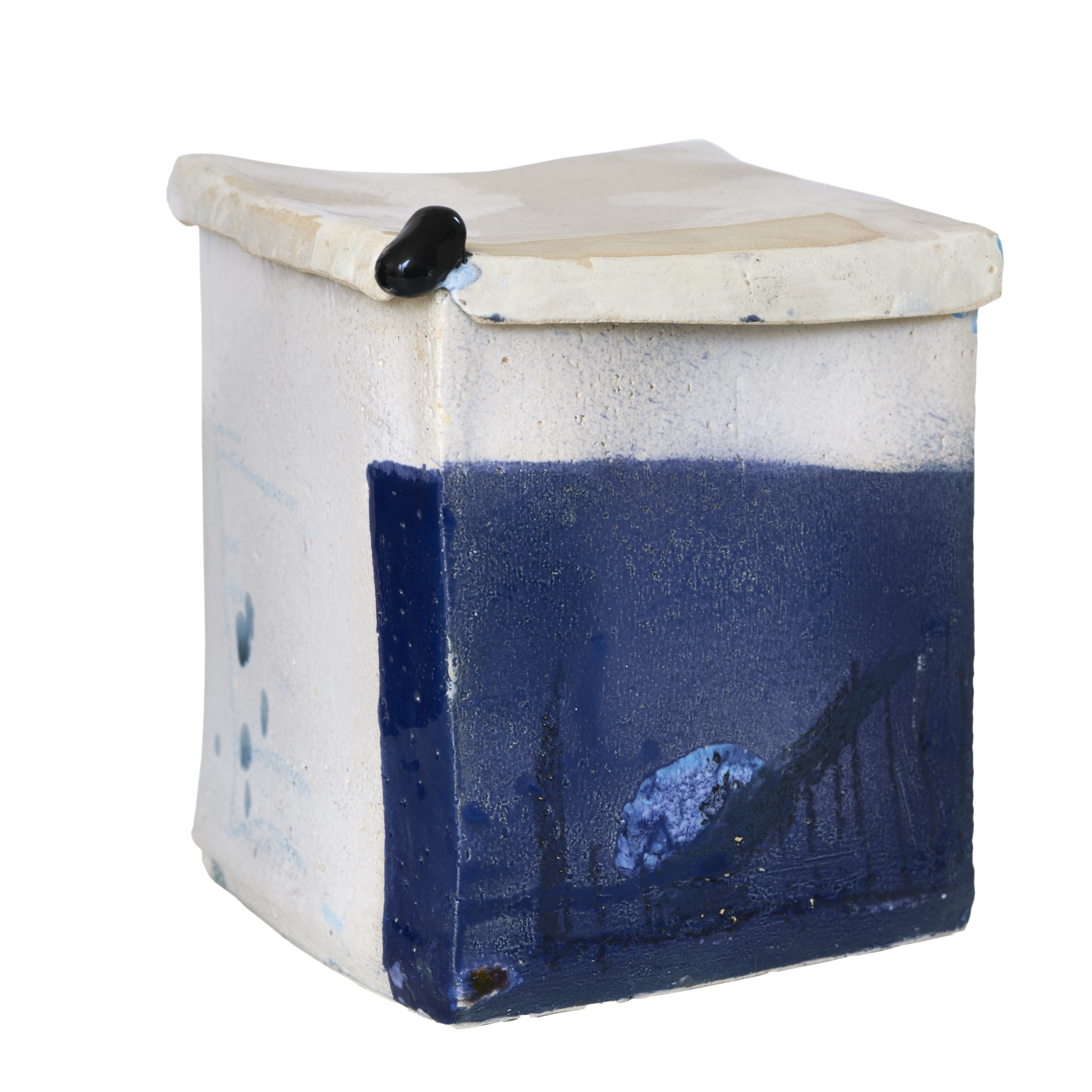
Presence of an Absence brings back into public view a body of drawings and paintings that has remained almost entirely preserved for more than two decades—and whose singular sense of presence emerges all the more clearly today.
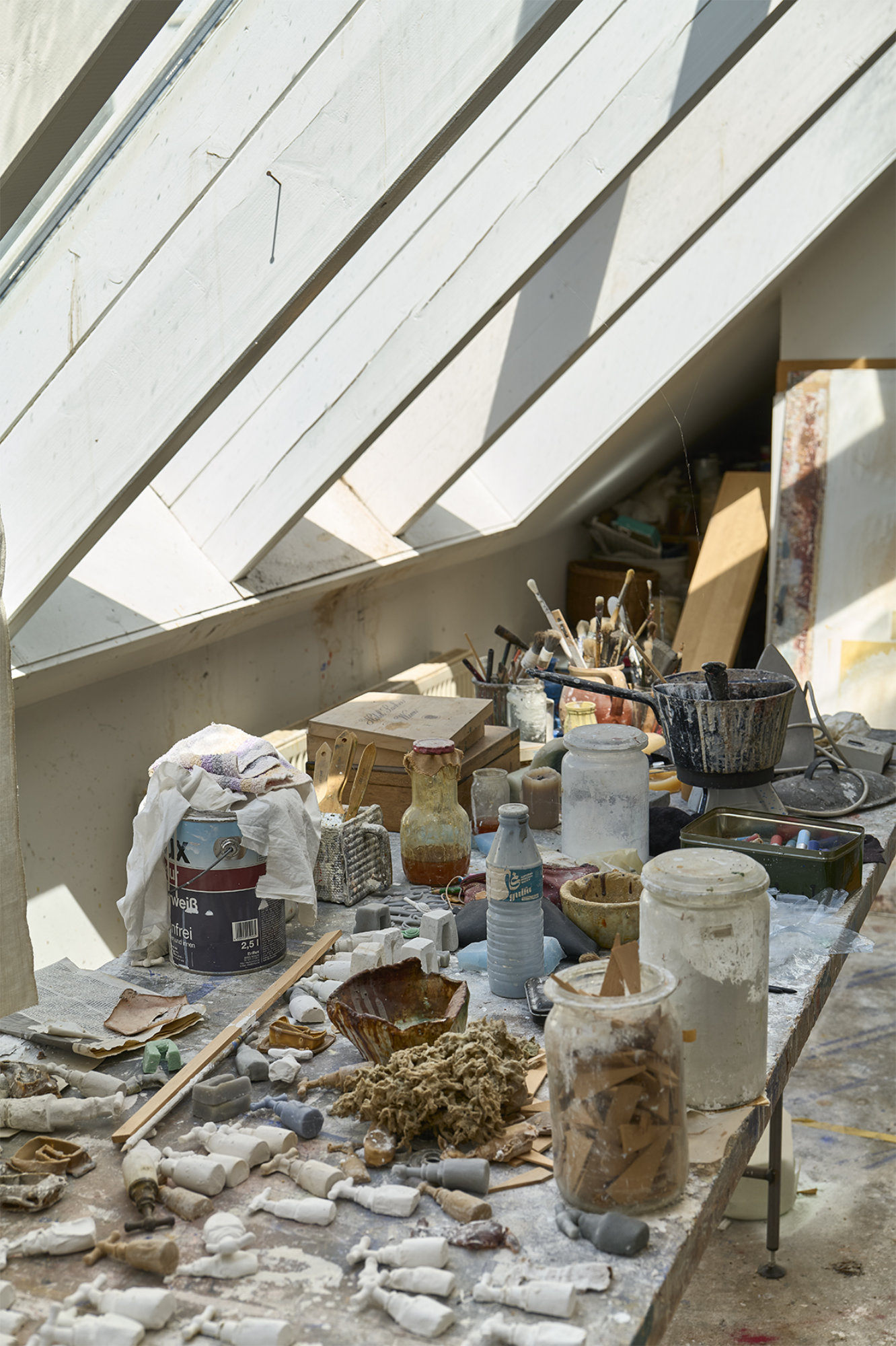
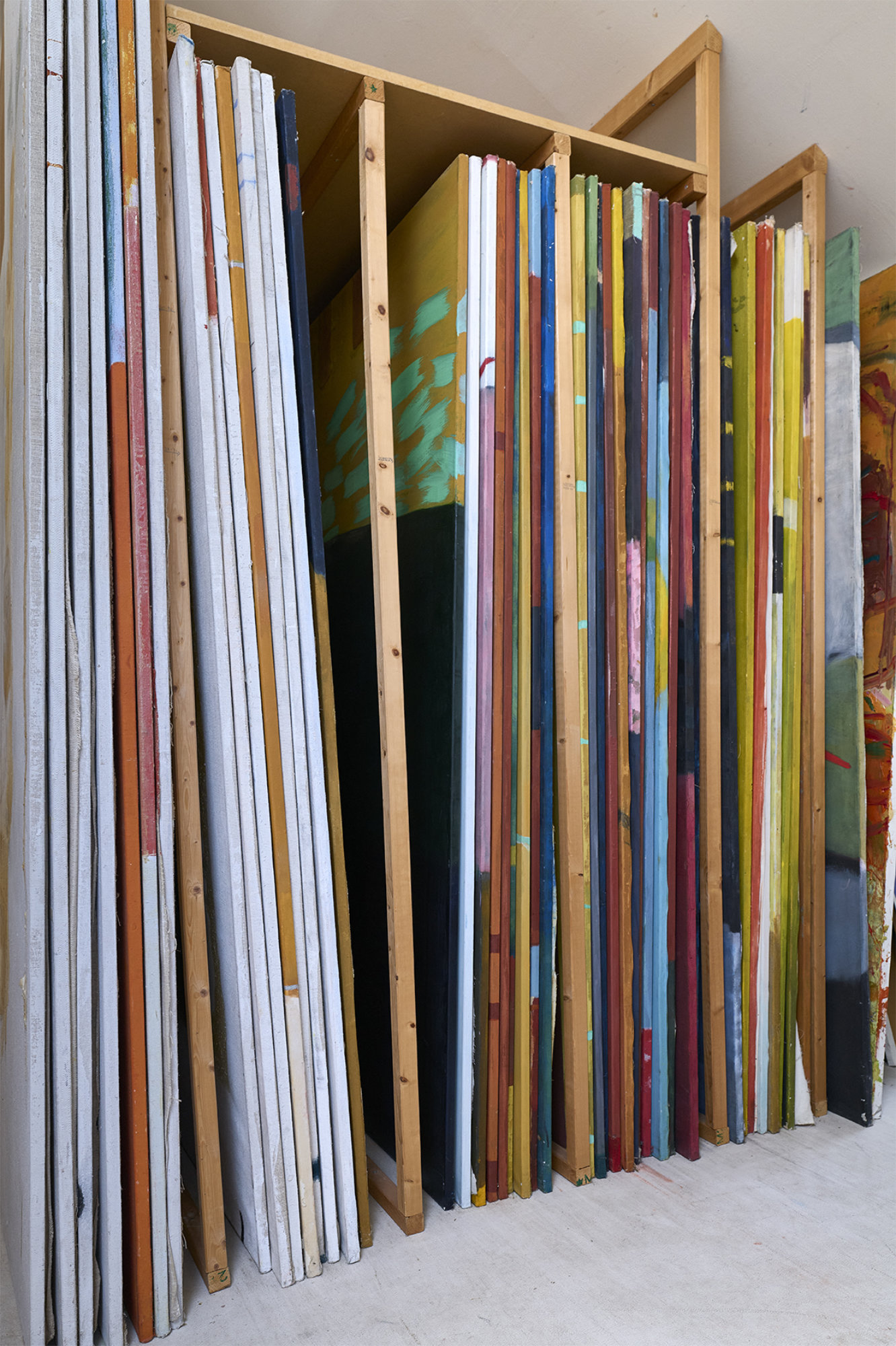
Sabine Reuter died in 2005 at the age of just 51. She left behind more than a thousand drawings and paintings, as well as an almost completely preserved studio in Stuttgart, which, thanks to the dedication of her partner Richard Lampert, has remained untouched since her death.
To enter this studio today is to encounter the presence of an absence. Books, photo albums and plan chests, paints, varnishes and plaster casts, newspaper clippings, found objects and the raw materials of her painting have all remained. In Portuguese, there is a word for such an experience: saudade—the presence of an absence. This “presence of an absence” forms the point of departure for the exhibition.
Reuter was an artist of condensation.
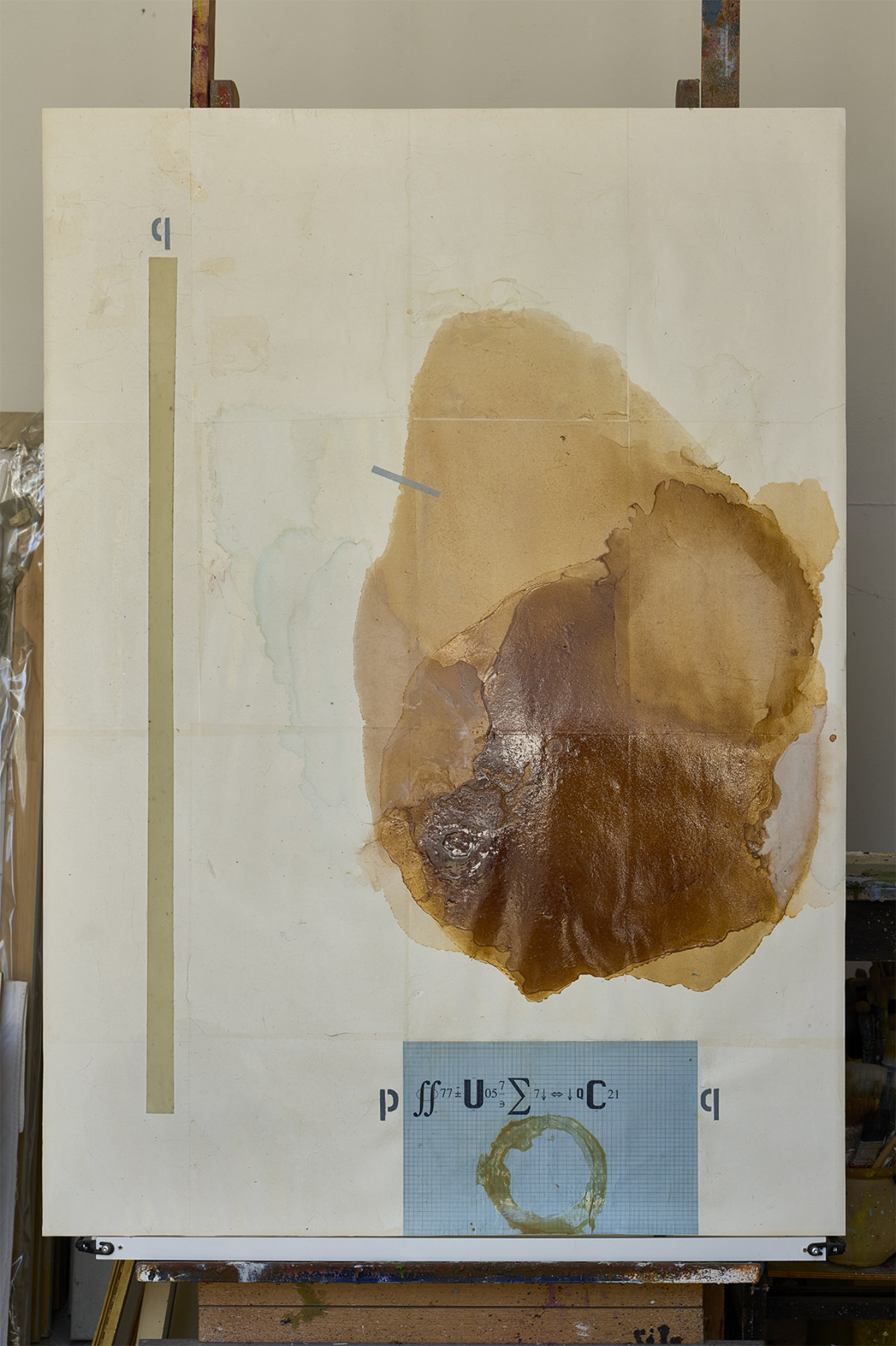
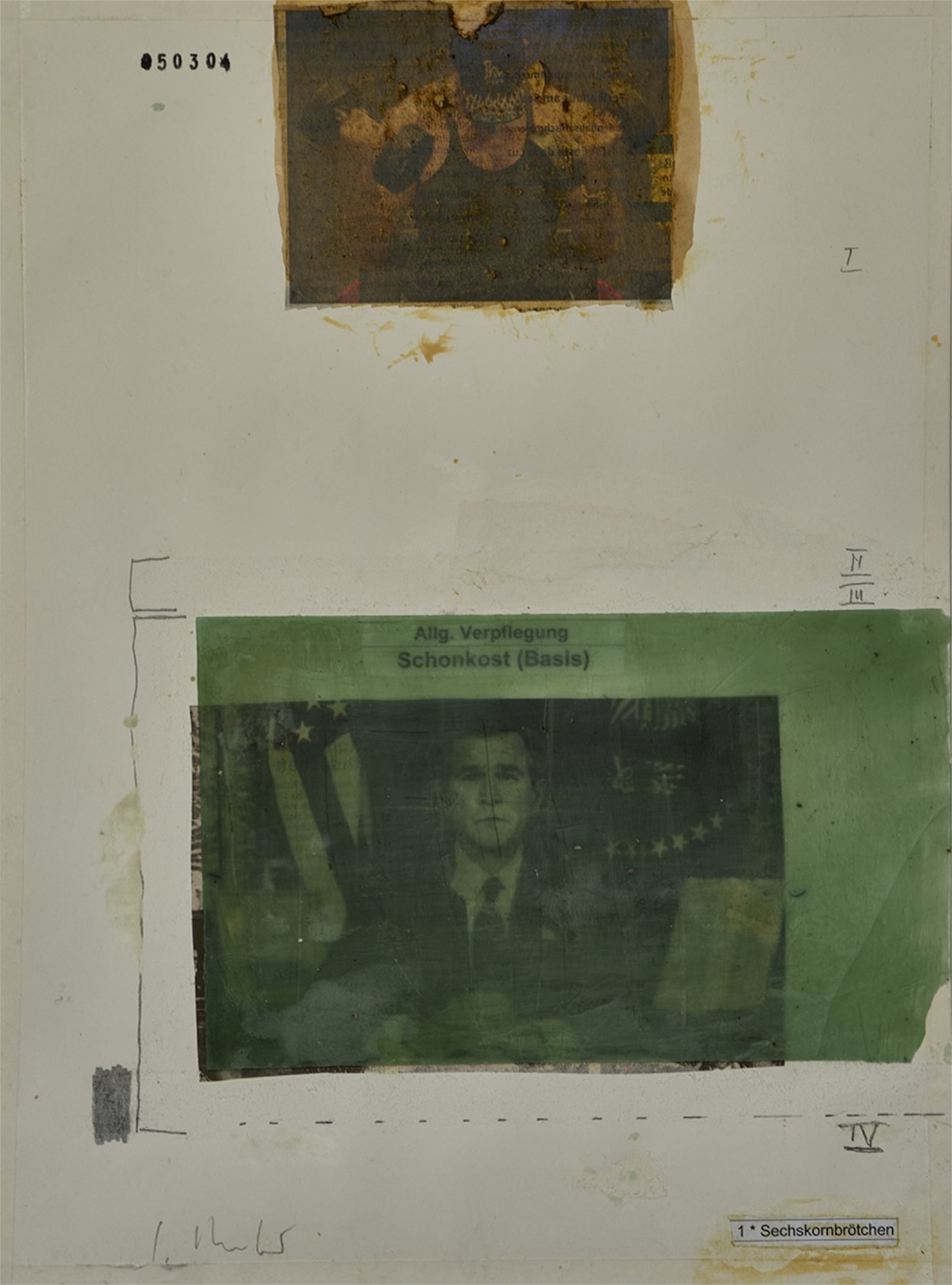
Her painting emerged from a way of thinking that made no separation between literature, poetry, music, philosophy, mathematics and the observation of everyday life. She read Gertrude Stein, Ernst Jandl, Thomas Bernhard, Elfriede Jelinek, Robert Musil, Ingeborg Bachmann and Paul Celan; Ludwig Wittgenstein became an important point of reference. From her engagement with language, she adopted not so much statements as methods: compression, repetition, rupture, displacement and omission. What might be a syllable in a poem or a symbol in a formula becomes, in her work, colour, surface, material and trace.
Her paintings are therefore not illustrations of ideas. They are movements of thought—and at the same time are sustained by a pronounced sense of rhythm. Divisions of space, proportions and sequences of colour can at times seem like visual metres. The invisible pulse of music and the rhythm of concrete poetry find their counterparts in her painting without ever allowing themselves to be translated into unequivocal meanings.
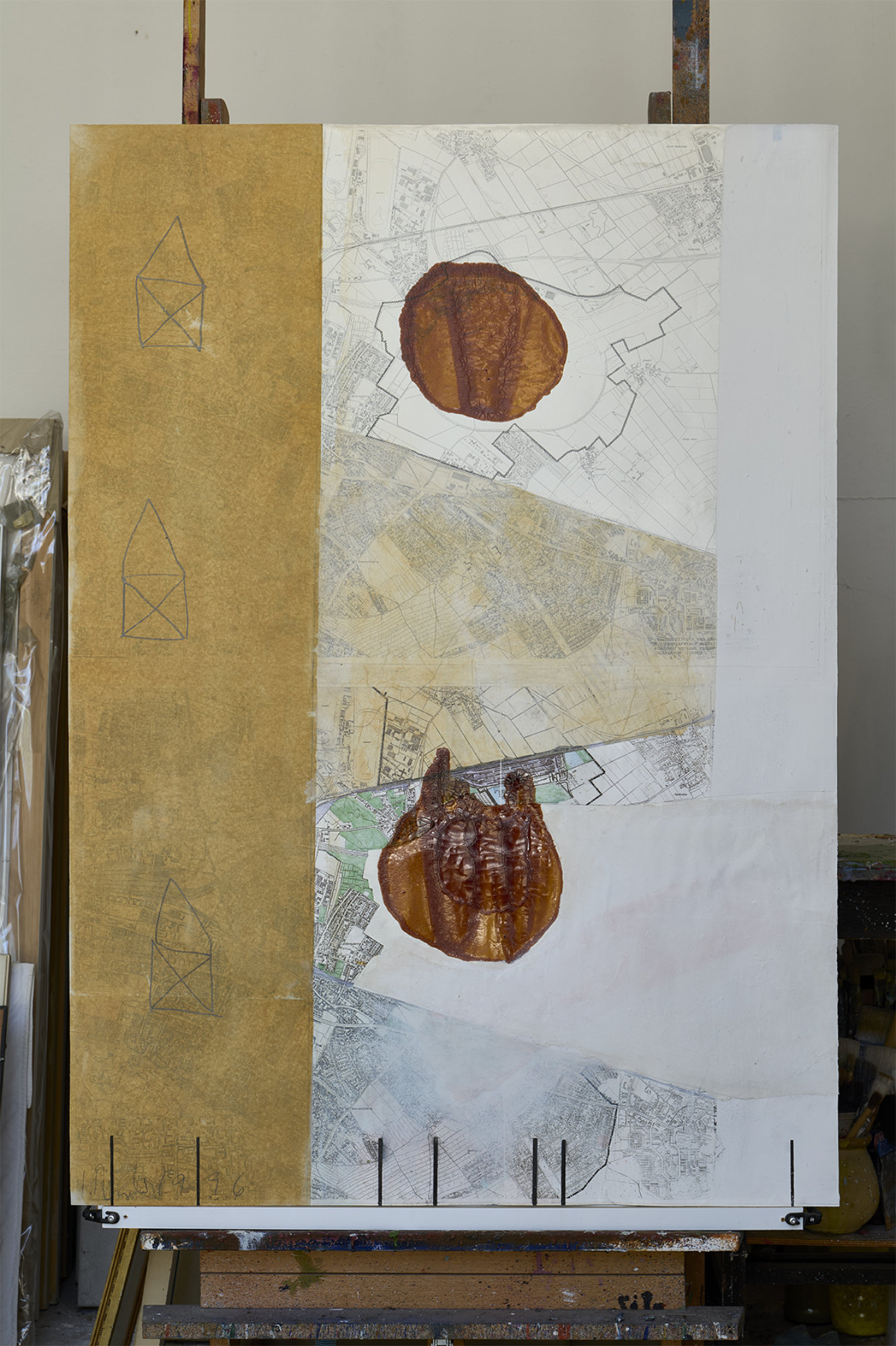
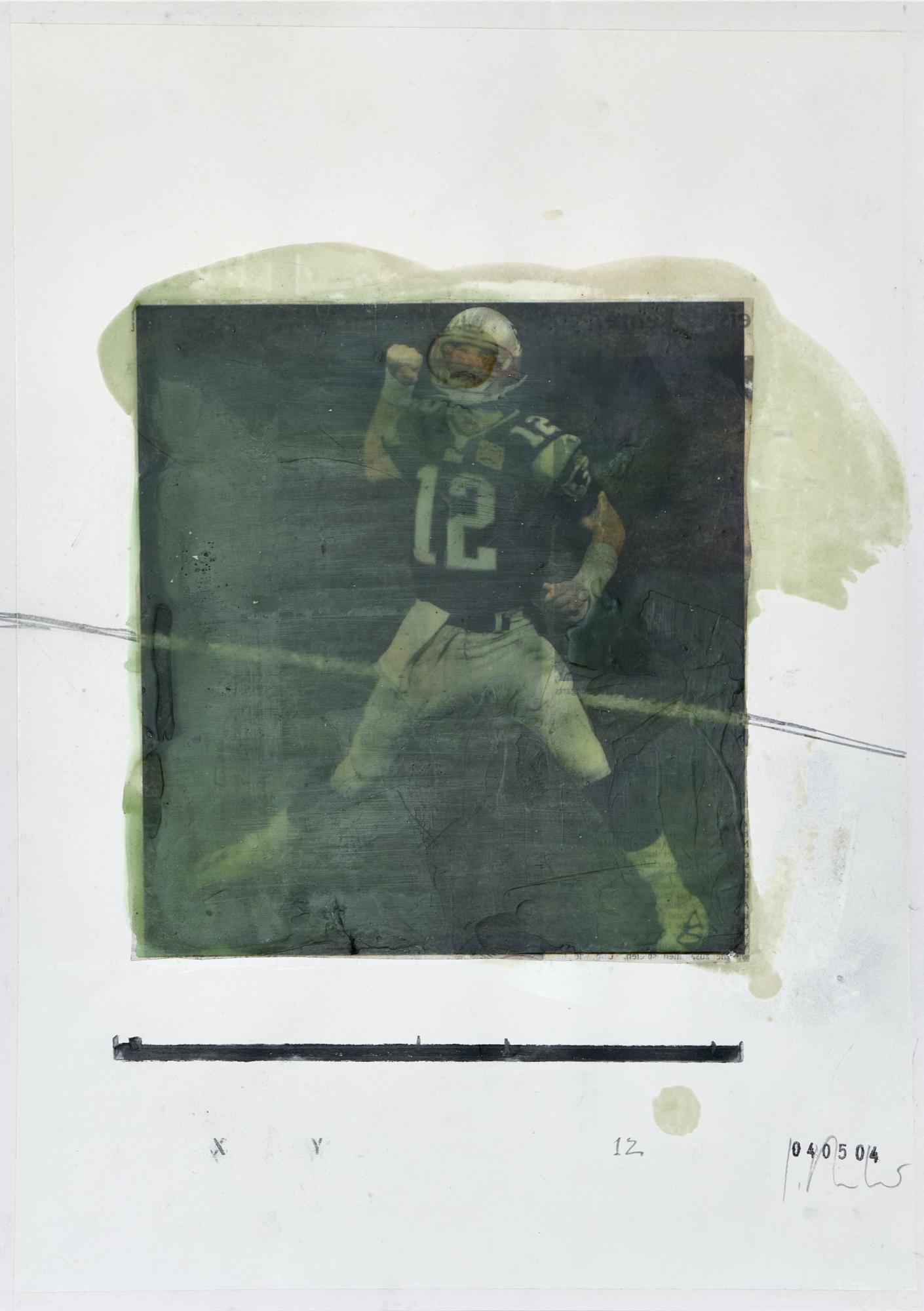
Letters, numbers, dates, fragments of text, newspaper clippings, city maps and mathematical formulae encounter plaster, sand, shellac and pigments she mixed herself.
At the same time, her works maintain a remarkable balance between precision and openness. Layer rests upon layer; the painting over of what lies beneath becomes an elemental part of the image, remaining present as trace, intimation or resistance. In this sense, Sabine Reuter’s paintings are palimpsests: they preserve the history of their own making without revealing it.
“Das Bild sagt mir also sich selbst” (“The picture thus tells me itself”) is one of her opaque formulations, borrowed from literature. It points to an essential quality of her work: the picture need not mean anything other than itself in order to be something. It can pose questions, release associations and unsettle habitual ways of seeing.
Perhaps this is precisely why her works do not feel like historical artefacts today. Her engagement with fragments and superimpositions, with language, material, shards of information and open systems of meaning resonates with a present in which reality itself increasingly seems to consist of excerpts, signs, data and images layered one upon another.
Presence of an Absence should therefore be understood less as a retrospective art-historical classification of Sabine Reuter’s work than as a fresh encounter with an oeuvre that had long disappeared from public view—and which, with surprising prescience, seems to anticipate the conditions of our own time.
Accompanying the exhibition is an 80-page book edited by Max Dax and Richard Lampert, featuring an extended oral history, views of the studio and numerous reproductions of Reuter’s works.
Text: Max Dax, 2026
Photos