




VIN VIN Gallery curated by Marta Papini
„I'm Very Into You“
www.vinvin.eu
Curator(s):
Marta Papini is an independent curator.She is the curator of Radis, a four-year public art project promoted by the Fondazione ArteCRT. In 2025 she curated the exhibitionFata Morgana with Massimiliano Gioni and Daniel Birnbaum, organized by Fondazione Nicola Trussardi, Palazzo Morando, Milan. She is the associate curator of Dimanche Sans Fin, at Centre Pompidou-Metz(2025).In 2024 she was co-curator of The Parliament of Marmots, 9th edition of the Biennale Gherdëina (2024) and of Thinking like a Mountain(2024-2026), with Lorenzo Giusti. In 2023 she was a member of the selection committee for the Future Generation Art Prize. She was the artistic organizerof The Milk of Dreams, 59th edition of the Venice Biennale, curated by Cecilia Alemani (2022). She has curated, co-curated and organized several exhibitions, including Lonely Are All Bridges. Birgit Jürgenssen and Cinzia Ruggeriat Fondazione ICA, Milan (2025) and Galerie Hubert Winter, Vienna (2021); Il mondo magico, Italian Pavilion at the 57th Venice Biennale (2017, curated by Cecilia Alemani); The Artist is Present, Yuz Museum, Shanghai (2018, with Maurizio Cattelan).

Artist(s):
-
Lydia Silvestri (Chiuro, 1929 - 2018) is trained at the Brera Academy as a stual of Marino Marini. Since the 1950s, he has exhibited at the Rome Quadriennale (1956) and the Venice Biennale (1956, 1966), and teaches in England, the United States and Hong Kong. His research is dedicated to the human figure, in particular to the female body, investigated through a progressive formal synthesis that moves from figuration towards semi-abstract forms, influenced by Asian art known during numerous trips abroad. Adopting different materials such as bronze, stoneware and Murano crystal, he developed series such as the Torsi (1964), the Ex Voto (1965), the Dreams (1971) and the cycles inspired by the myth and biblical texts (History of Salome, Ariadn and the Minotaur). He realises numerous public works and commissions in Italy and abroad. From 1985 to 1996 he taught sculpture at the Brera Academy. In 2019 the Lydia Silvestri Foundation was born, which protects and promotes its artistic heritage.
-
Cecilia De Nisco (b. 1997, Parma) lives and works in Vienna, Austria. She attended a Bachelor Degree in Graphic Art and a Master Degree in Visual Arts at University of Arts in Urbino, Italy. Through intentional blurring, shadows, grain and pixelation, De Nisco reflects on the phenomenologies of desire. In her work, visibility becomes both an emancipatory category and a potential source of danger for marginalized identities, highlighting the inherent tension between the need of self-expression and imposed societal norms.
Through exploration of visual noise and gaze, De Nisco orchestrates a delicate yet powerful interplay, where the desire and intimacy are both alluring and elusive. Theatrical, figurative scenes resist definitions: intimacy and affection weave together with a looming threat of violence, as the selective lighting, dark palette, and entangled compositions enhance the sense of confusion. By confusing and anonymizing scenes assembled of her own memories and collected digital images, she exposes the tensions between visibility, belonging and safety. The play with those categories goes beyond the mere aesthetic demonstration: the fragmentation and obstruction of sight, the blurring of focus, all serve as tools to reflect the complexities of affective regimes and the constant negotiation of intimate power relations. Speaking to the beauty of intimacy with its dangers, threats and vulnerabilities, De Nisco’s paintings offer a space were ambiguity reigns supreme.
The artist transforms the mundane scenes into enigmatic, yet sublime compositions soaked with mythological and surreal undertones. In this suspended moment before something happens, when everything can change, De Nisco invites us to ponder the beauty and the transformative power of the unknown and unrevealed. The young figures on her paintings are intimately entangled with one another yet alienated, absent and shrouded in anonymity, undermining our own assumptions, judgements and expectations.
- Jakub Gawkowski
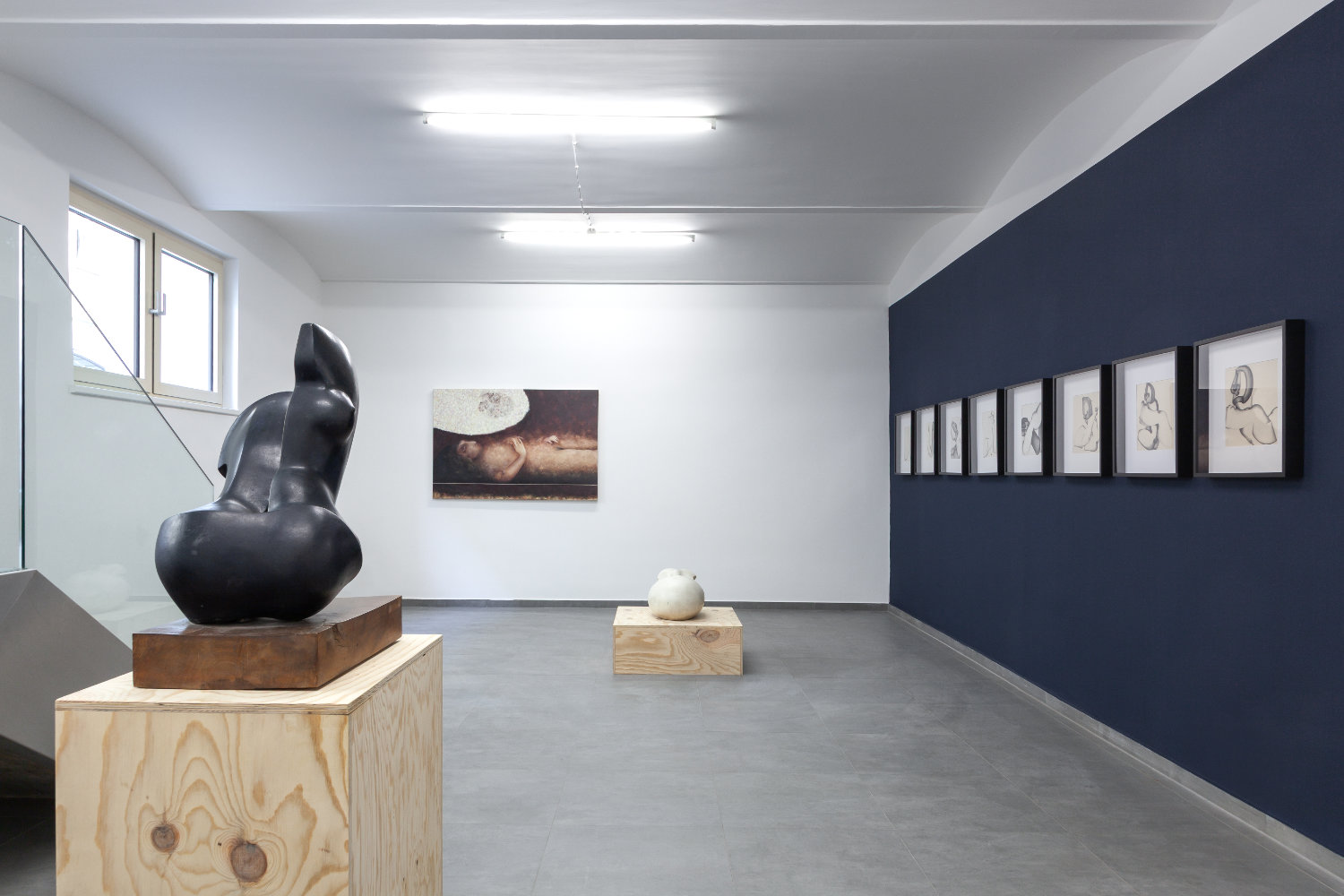
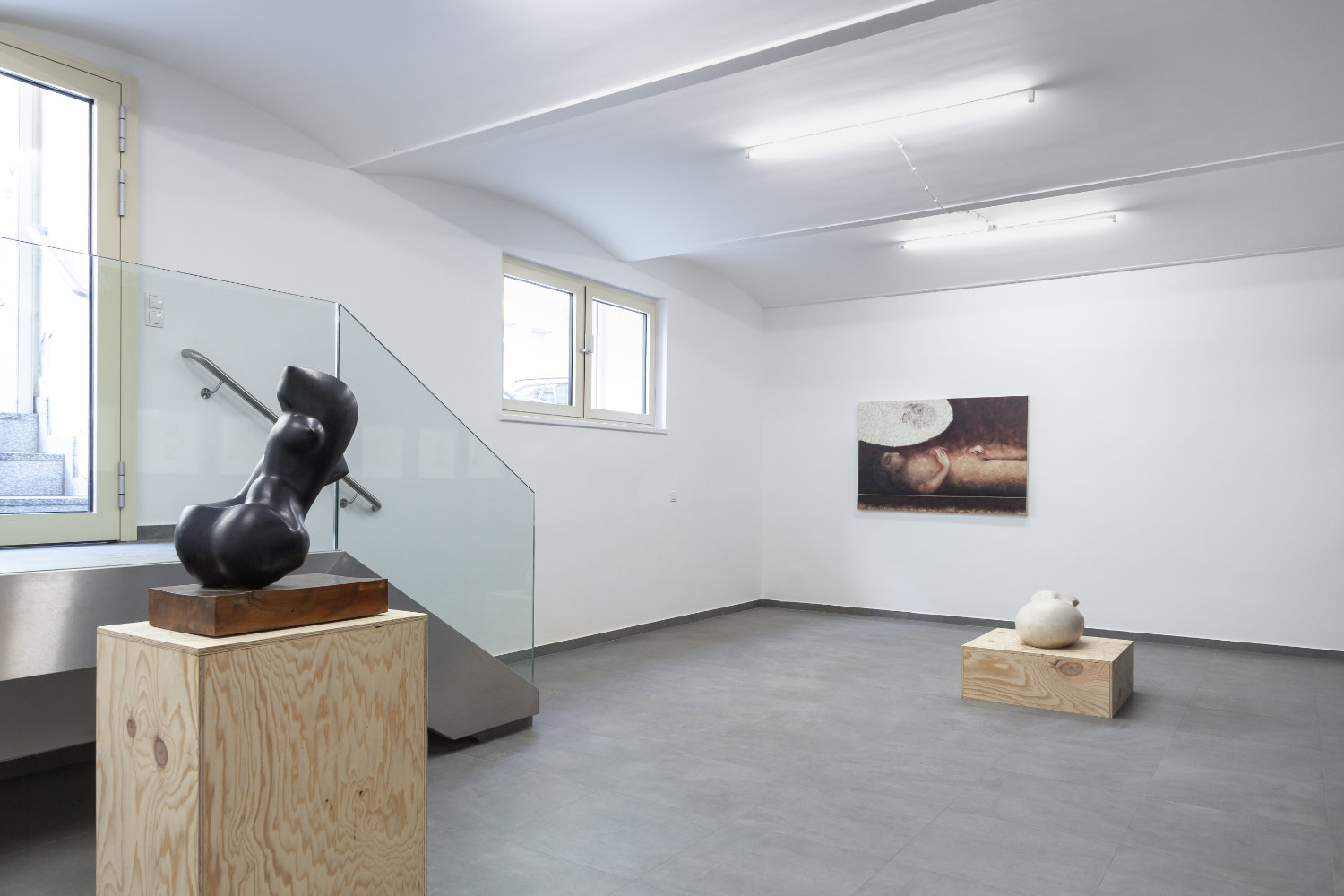
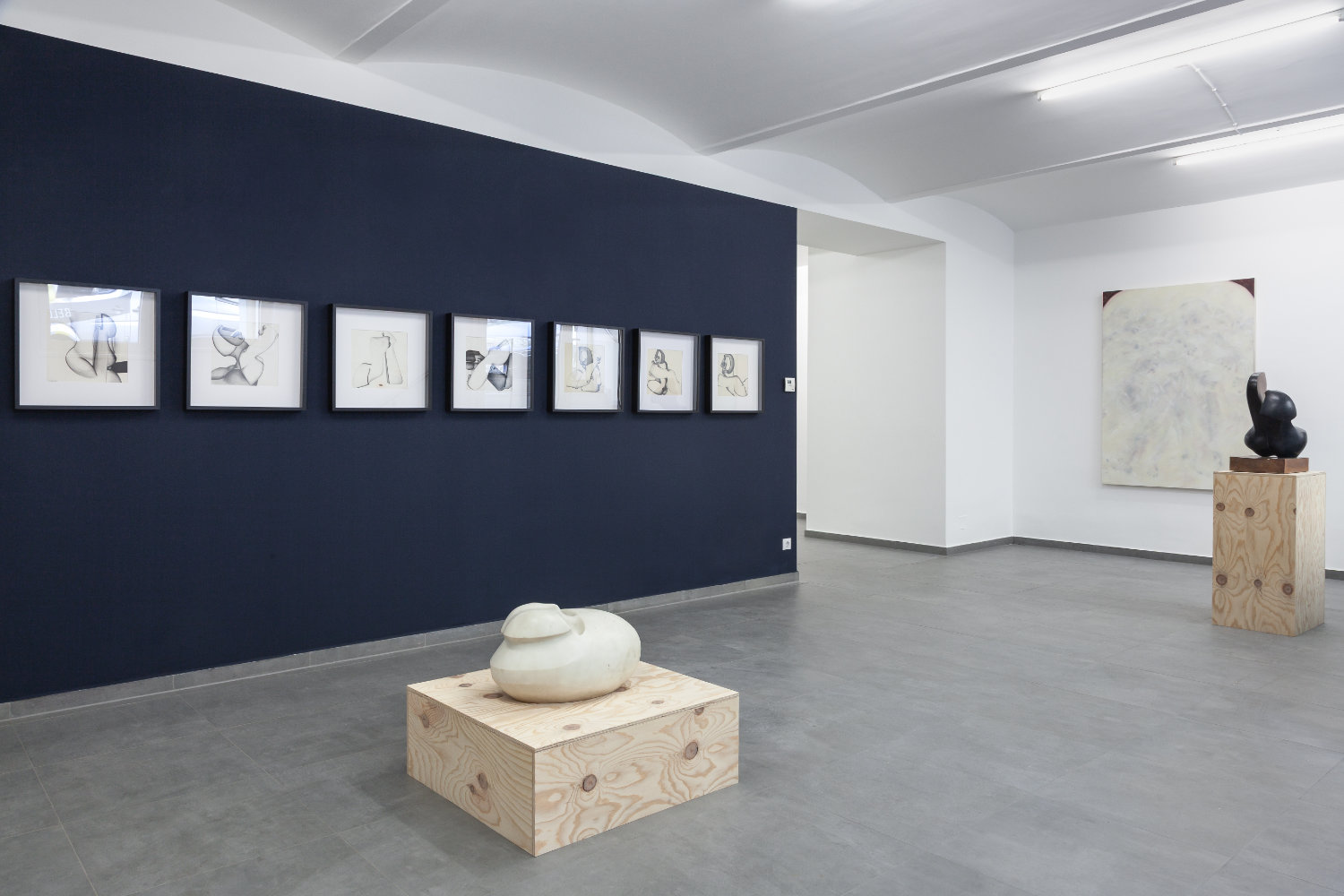
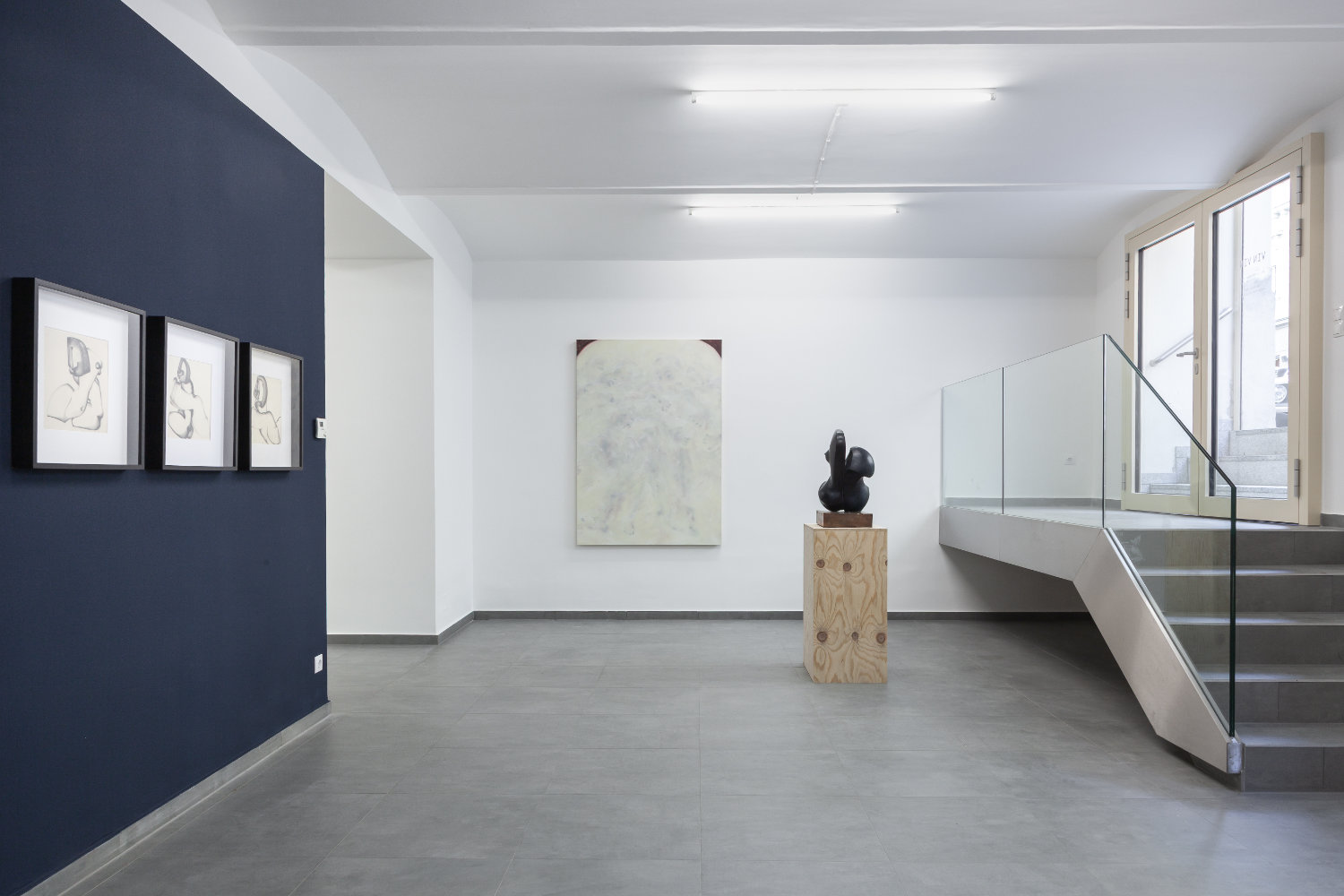
I’m Very Into You is the meeting point between the works of two Italian artists of different generations, Lydia Silvestri (Chiuro, 1929 – 2018) and Cecilia De Nisco (Parma, 1997).
The exhibition borrows its title from the collection of emails exchanged in 1995 between two writers, the American Kathy Acker and the Australian McKenzie Wark, published by Semiotext(e) in 2015. The two barely knew each other, and their relationship lasted only a few weeks after the correspondence ended. In that dense exchange of emails, sent from opposite ends of the world over just two weeks, Acker and Wark confide in one another, expose their vulnerability, unmask themselves, and reveal themselves. In a word, they seduce each other with an intensity only strangers can reach.
It is a seduction that enacts a struggle for intimacy which is also a struggle with intimacy. Intimacy, and how much we can have of it and make of it, is at the core of this conversation: Acker and Wark move within a limbo, undecided between desiring and being desired, seducing and being seduced. Their roles keep slipping, “going high low, power helpless even captive, male female, all over the place”; the body becomes written language, and desire turns into a question of power and role-play: “I know what you mean about slipping male/female I never know which one I am I used to get all worried about myself, I should make decisions, announce a name, and at some point I just gave up ‘cause it’s too difficult”, Acker writes. Then, as in an inevitable chemical reaction, emotion precipitates and settles into a simple, revealing sentence with which Acker closes one of their last exchanges: I’m very into you. An ambiguous declaration: on the one hand it discloses a deep feeling, a willingness to surrender; on the other, the desire to be inside the other, and therefore to possess them.
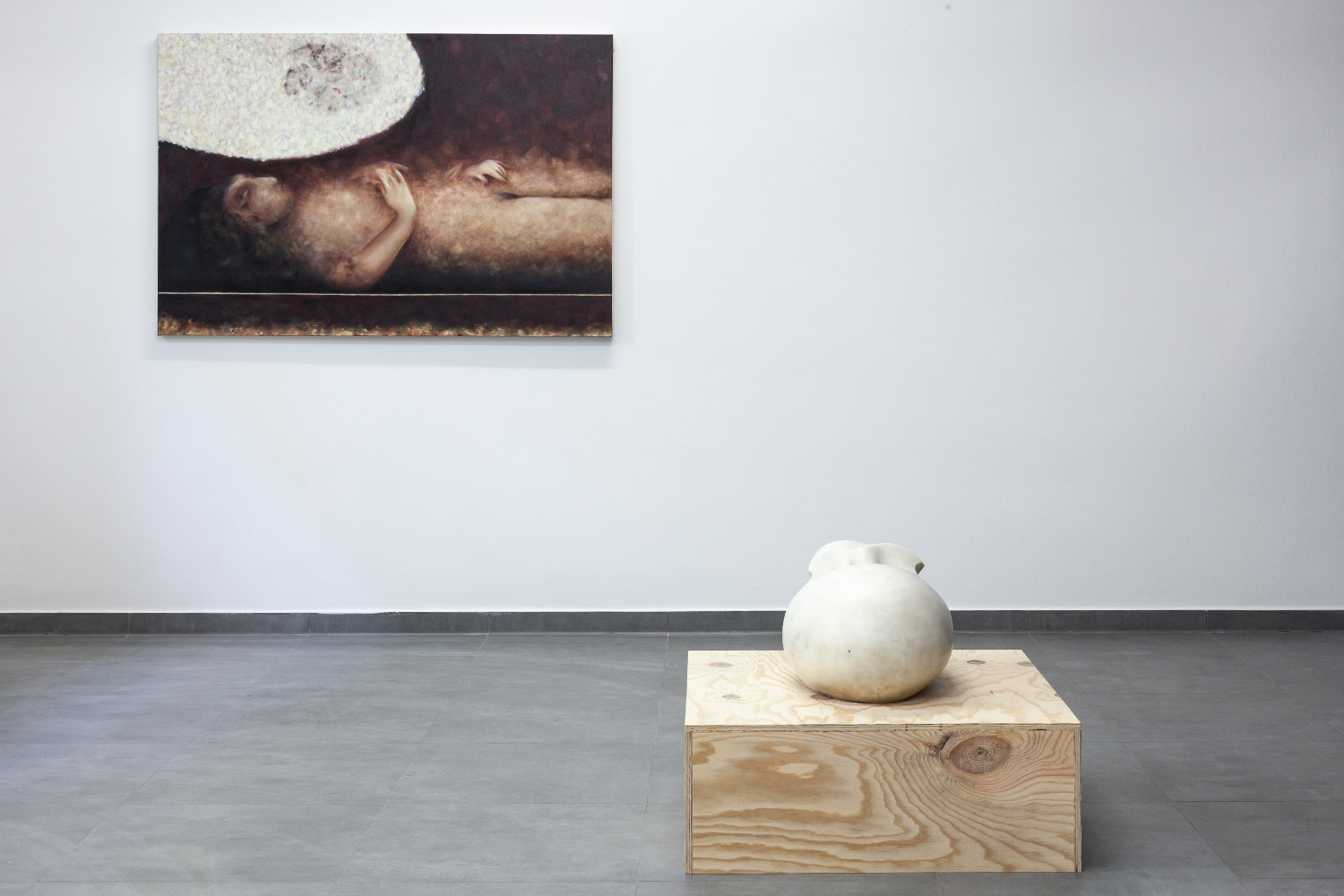
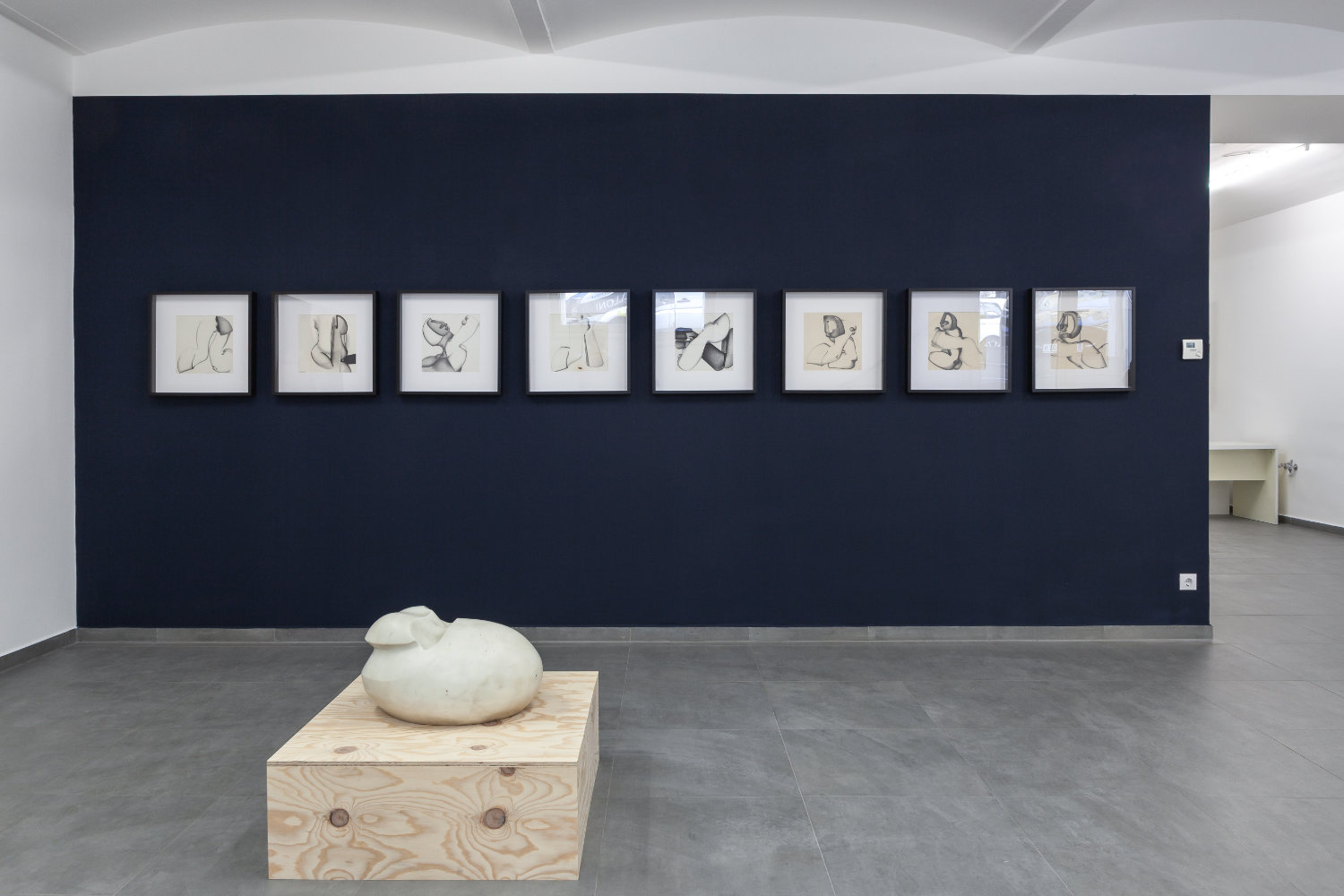
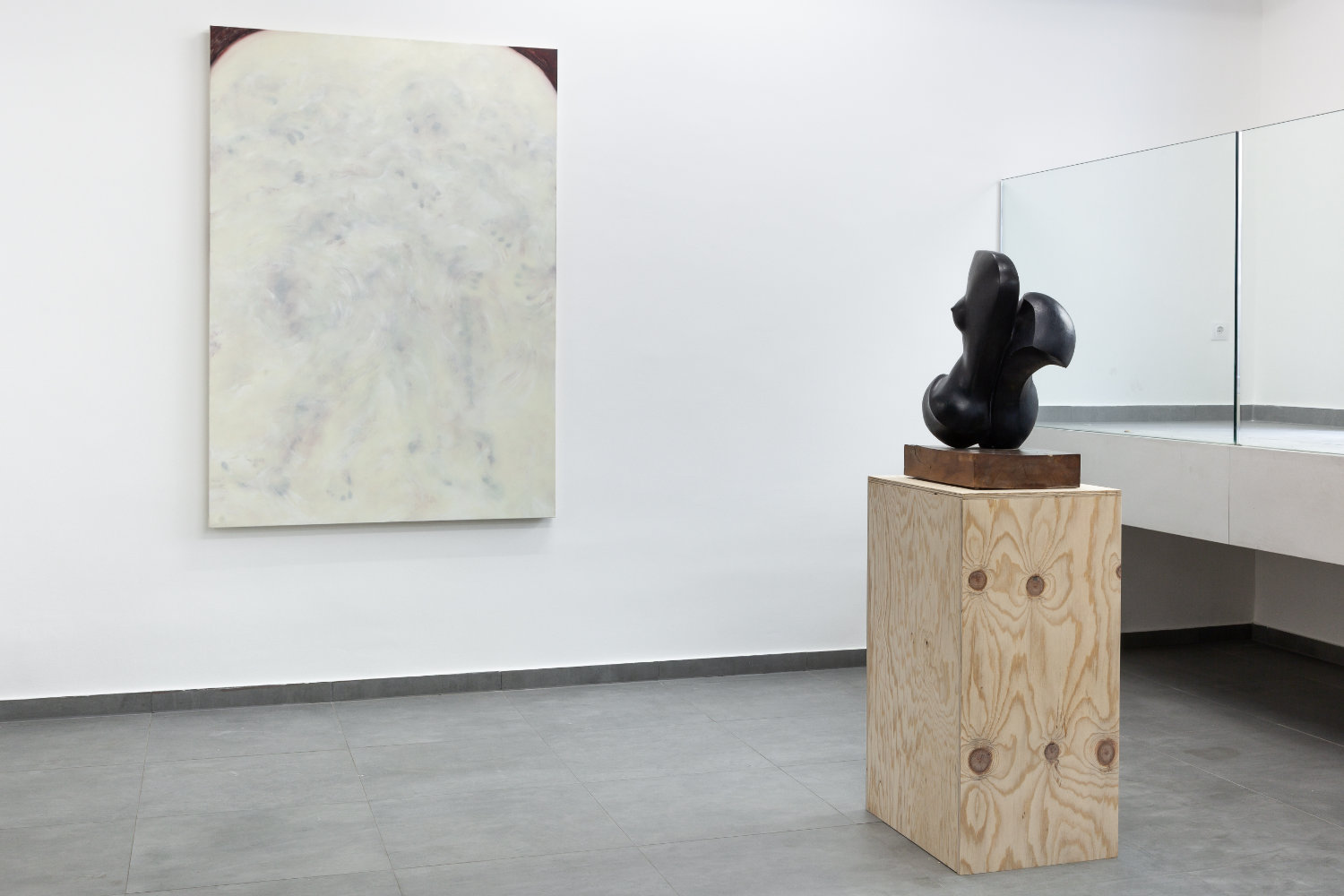
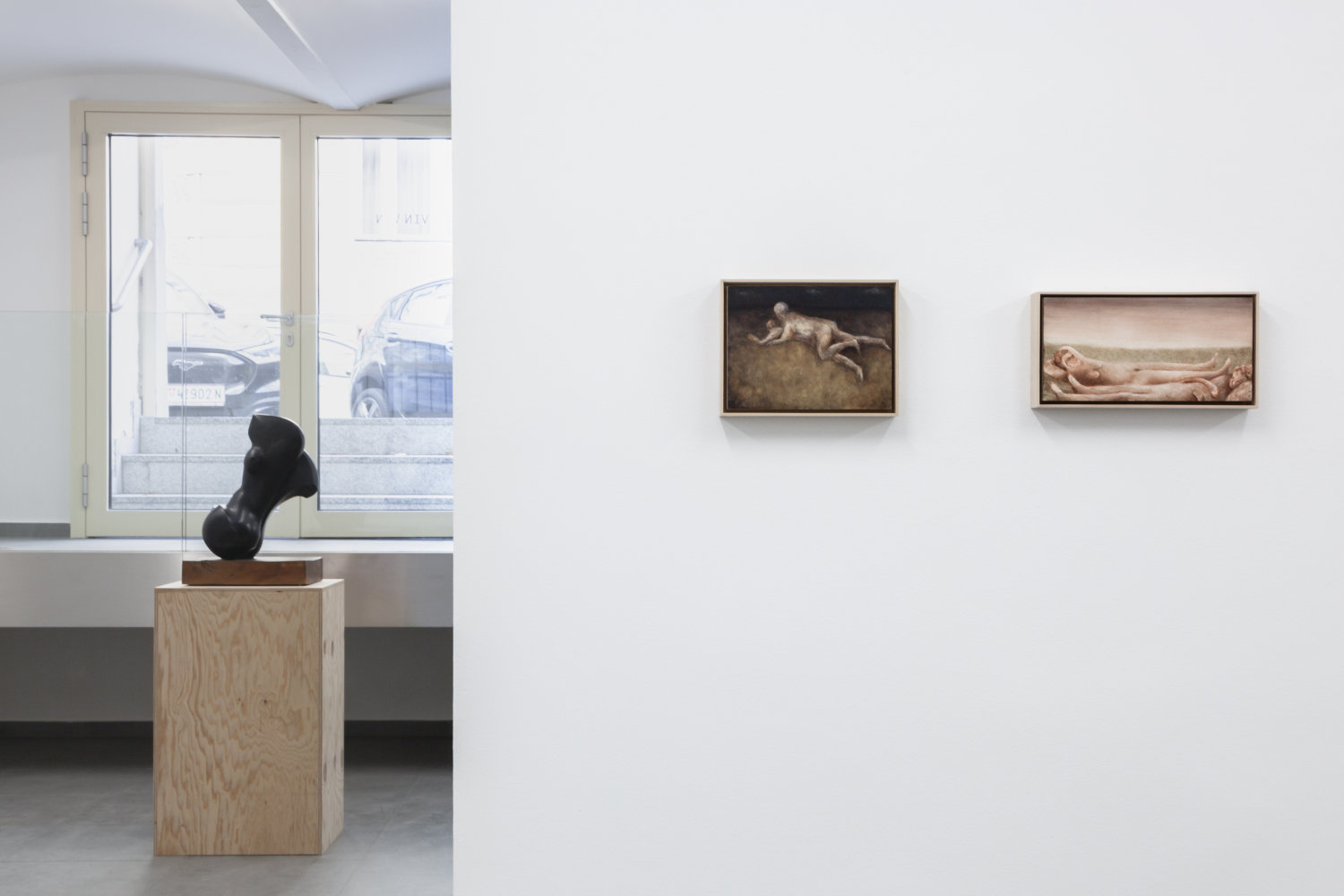
It is this ambiguity between feeling and possession, between wanting to lose oneself in the other and fearing not to find oneself again, that Lydia Silvestri and Cecilia De Nisco convey through their works, sixty years apart. In the exhibition, Silvestri’s sculptures Ex Voto: Per un amore perduto e ritrovato (1965) and Ermafrodita (1972) give material form, from their very titles, to the ambiguity underlying her entire practice – an ambiguity that would later take shape in the more recent series Ambiguità (1992-1998), about which the artist stated: “Ambiguity should be understood as truth in the widest sense, something available to various interpretations”. In the same way, some years before, the drawings for the Incontri, studies related to the stoneware sculptures modeled in the early 1980s, embody what her critics had already called an “erotic constant”: figures intertwined in an amorous struggle, where attraction and fury, tenderness and mineral hardness coexist within the same form. It is Catullus's odi et amo translated into matter: spines and curving hips that stretch, knot, and stiffen. Trained at Brera under Marino Marini, Silvestri made the body – pushed toward a semi-abstract synthesis between myth and sacred narrative – a place where eros and conflict cannot be distinguished.
De Nisco paints, in her own words, “people doing absolutely nothing”: bodies in movement fixed in a suspended instant, in which the subjects’ intentions remain illegible, poised between desire and violence. Her painting escapes every category, every perimeter of meaning. “The canvas feels to me like a space where you can do what you don’t allow yourself to do in reality”, the artist has said, “and even when you do it on canvas you are not being completely sincere”. It is a struggle between desire, will and denial that surfaces in every work: De Nisco paints and then conceals, concentrates attention and light on a single point only to draw it away and divert it elsewhere, showing and hiding in the same gesture, as happens in the two canvases in the first room, Three faces and Tracing an unmade bed, where the paintbrush pushes towards abstraction while still letting us glimpse the traces of the bodies that gave those abstractions their form.
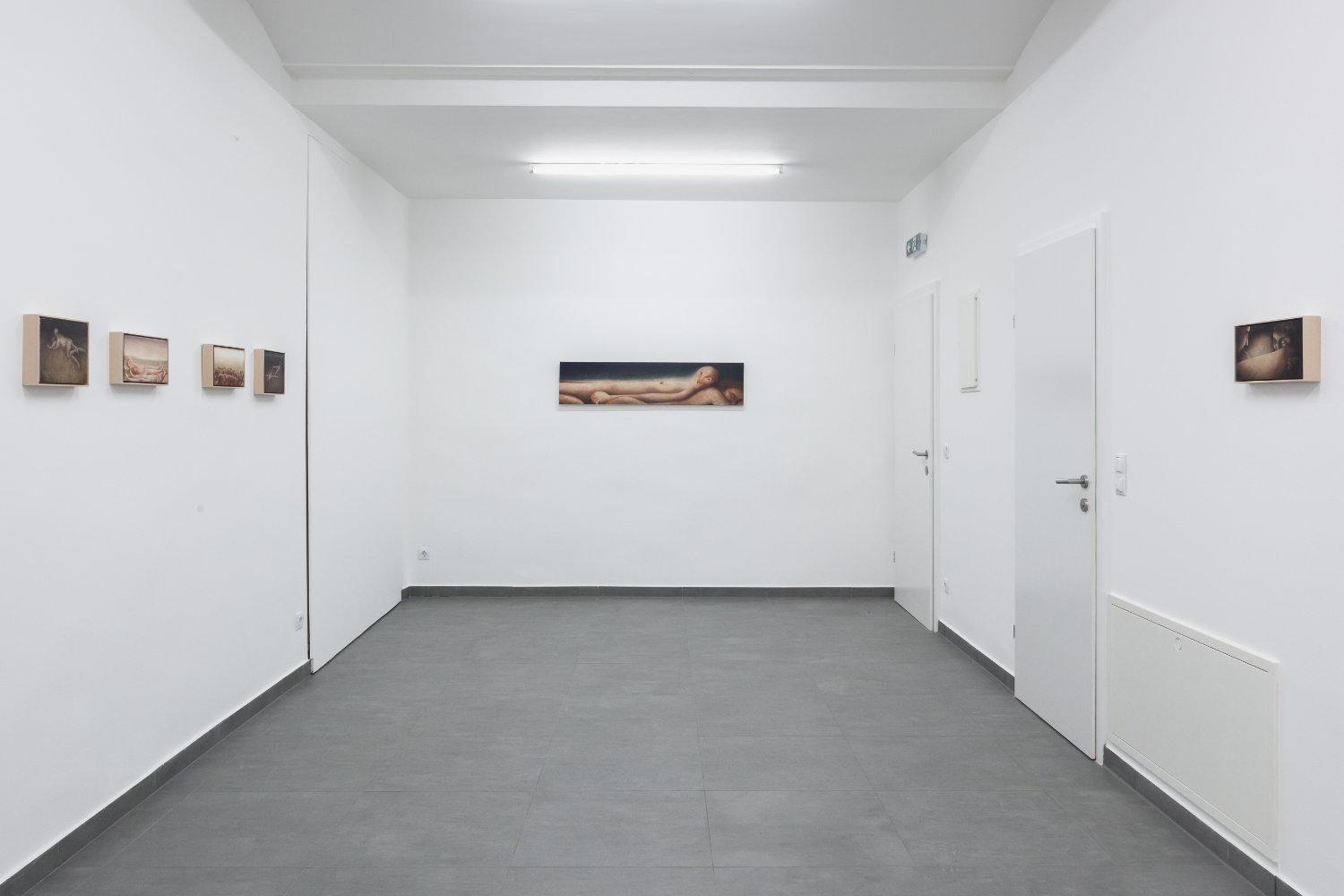
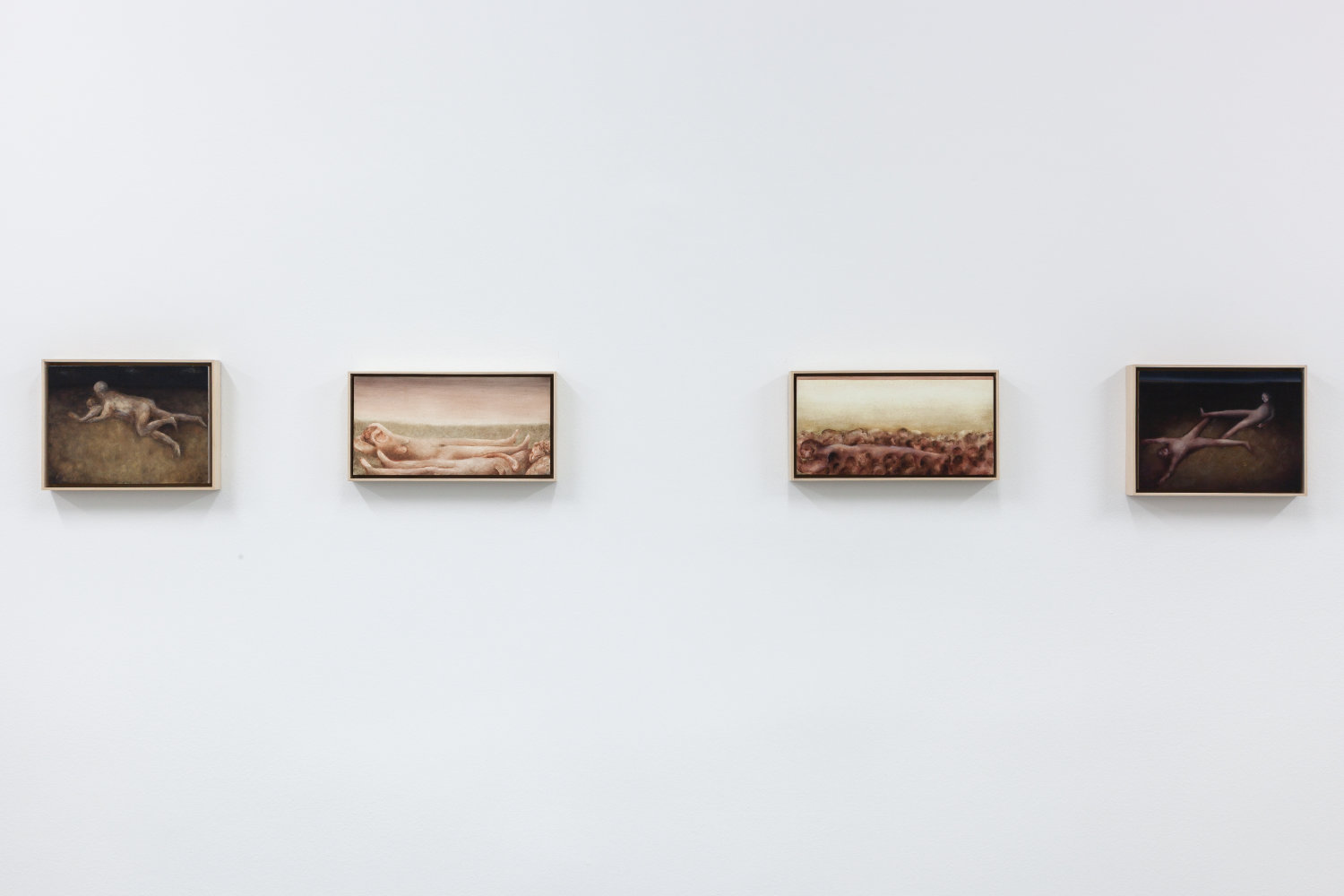
The four oil-on-board works titled Lotta tra galli, Tregua, Prima erano più affilati and Gli spettatori della miseria carry that tension into the landscape. The first shows two figures on top of each other, seemingly intertwined, their forms flowing into one another without clear distinction; the position appears ambivalent, a mixture of devouring in an act of primal lust and a gentle shower of affection. In the second, two figures lie together in indolence: they face opposite directions yet appear to be in unison in their idleness, seemingly merging into the landscape itself. In Prima erano più affilati, two bodies stretch across a dark ground, their limbs taut and pointed like blades the title already remembers as blunted: they do not embrace but intersect, and the crossing of their legs remains the only contact available. In Gli spettatori della miseria, finally, bodies accumulate until they become terrain: barely recognizable faces surface from a compact, rose-coloured mass that occupies the entire horizon line beneath an empty sky.
In Intuizioni #1 (2026) the motif of bodies and landscape is expanded: two figures dominate the large canvas, their presence itself forming a kind of living landscape, and the work explores the tentative yet luminous nature of physical closeness, conveyed through the radiance of the upper figure, while holding a quiet distance in the sleeping counterpart’s oblivion.
On the opposite wall, the oil on board L’incontro (2026), which from its very title acts as a counterpart to Silvestri’s Incontri, depicts two faces caught in a fleeting snapshot of claustrophobic motion, illustrating the endurance of closeness through an exposing brightness caught between them, and the interplay of initiating and withstanding intimacy.
The sequence closes with Mine sleeping bag (2026), a monotype on wood in which a face emerges, partially buried in intertwined limbs of uncertain origin, its expression suspended between mature depletion and childlike stupor, reflected in a soft, warm palette that balances delicate tones with more visceral hues.
Placed in dialogue, Silvestri and De Nisco share the same refusal: to represent relationships and love as something reassuring and unchanging. Like the reader of the letters in I’m Very Into You, whoever looks at these works is never an innocent witness: their gaze violates a private space where play, sensuality, and domination blur into one another. In their bodies, sculpted or painted, as in Acker and Wark’s emails, intimacy is never harmony, but exposure, risk, loss of control. I’m very into you: the moment when surrendering to someone also means no longer entirely belonging to oneself.
- Marta Papini, 2026
Photos
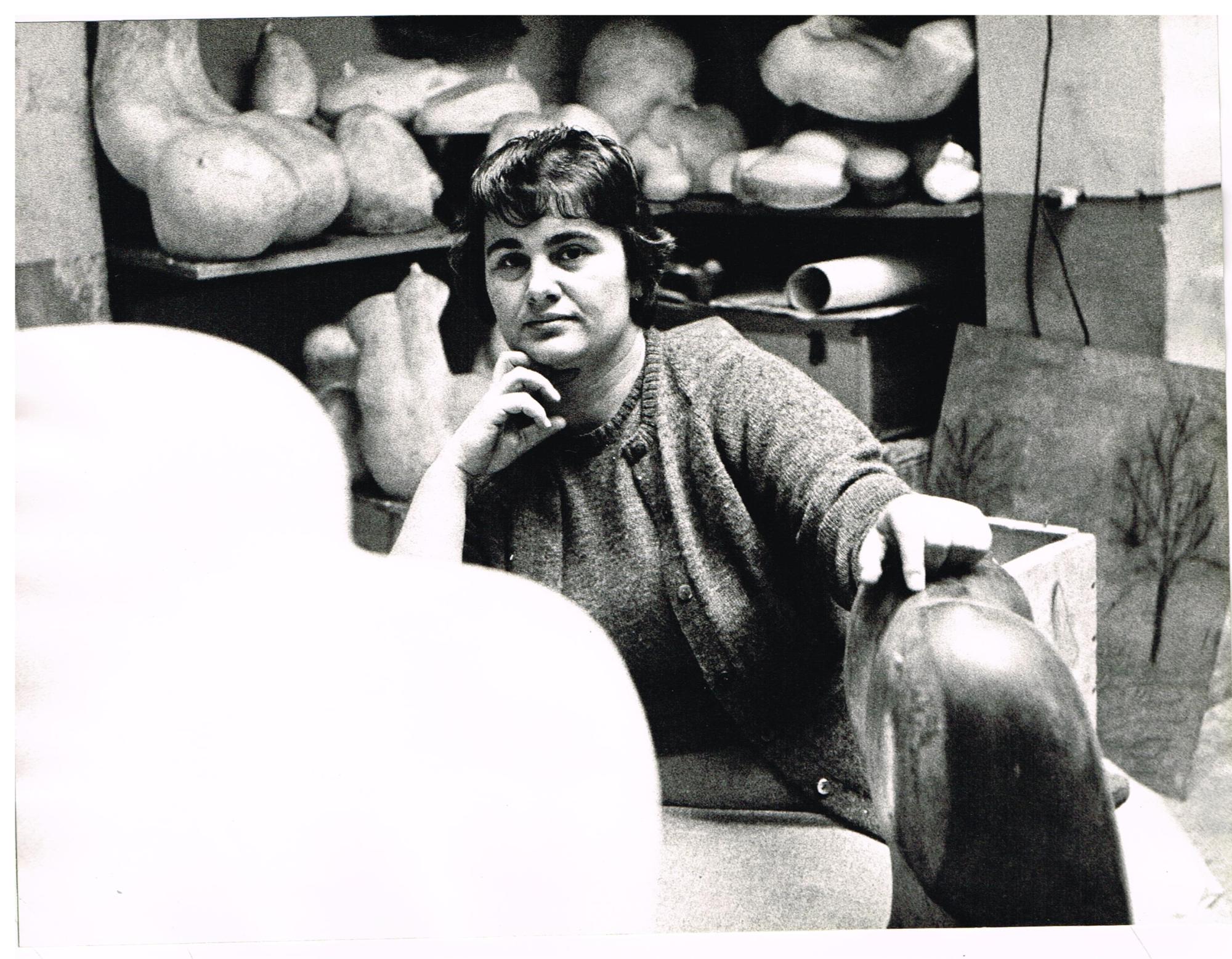
Lydia Silvestri in her studio in Via Borromei, Milan, 1965
Courtesy of the Artist, Fondazione Lydia Silvestri and VIN VIN Vienna
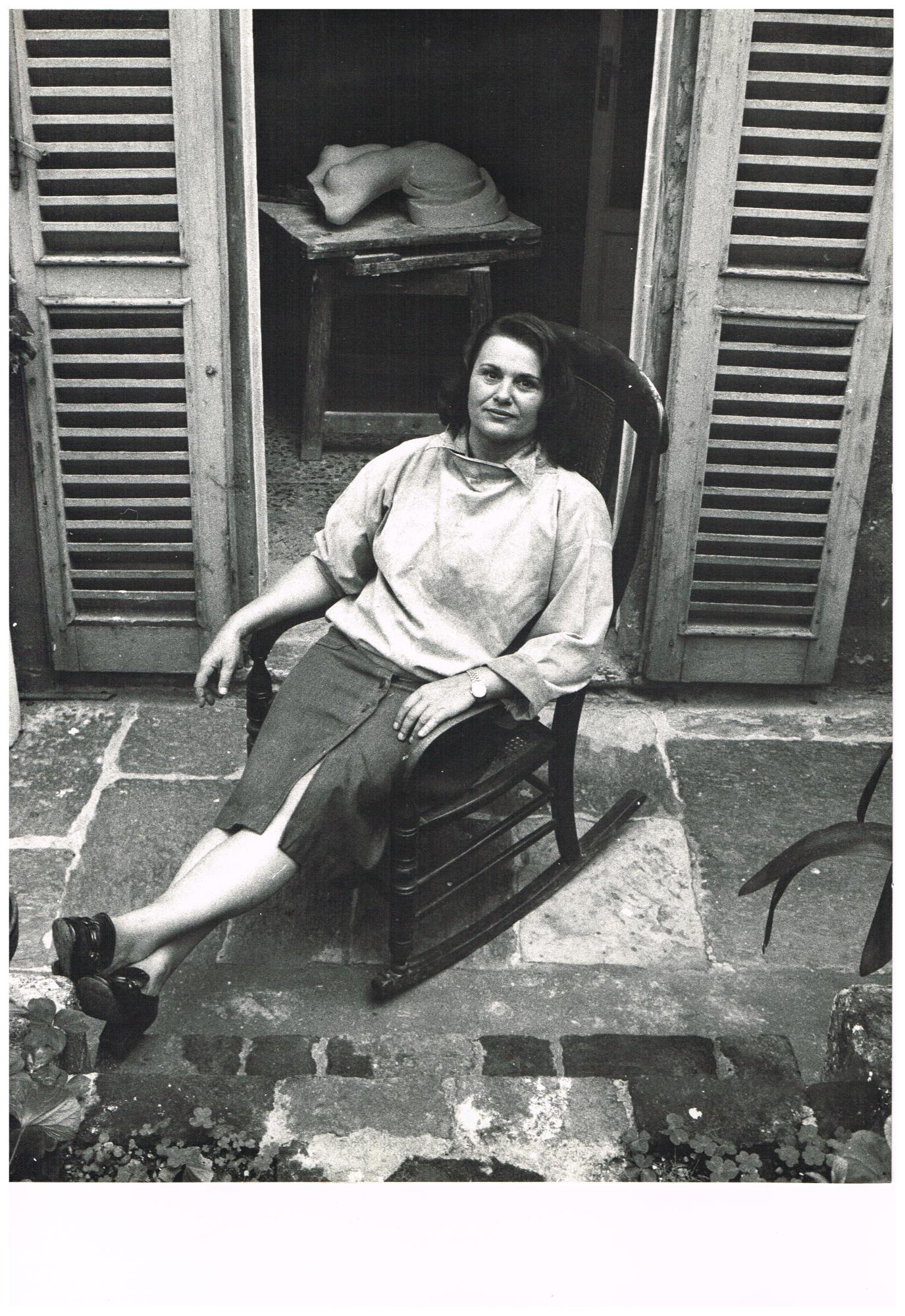
Lydia Silvestri in her studio in Via Sant'Orsola, Milan, 1972
Courtesy of the Artist, Fondazione Lydia Silvestri and VIN VIN Vienna.
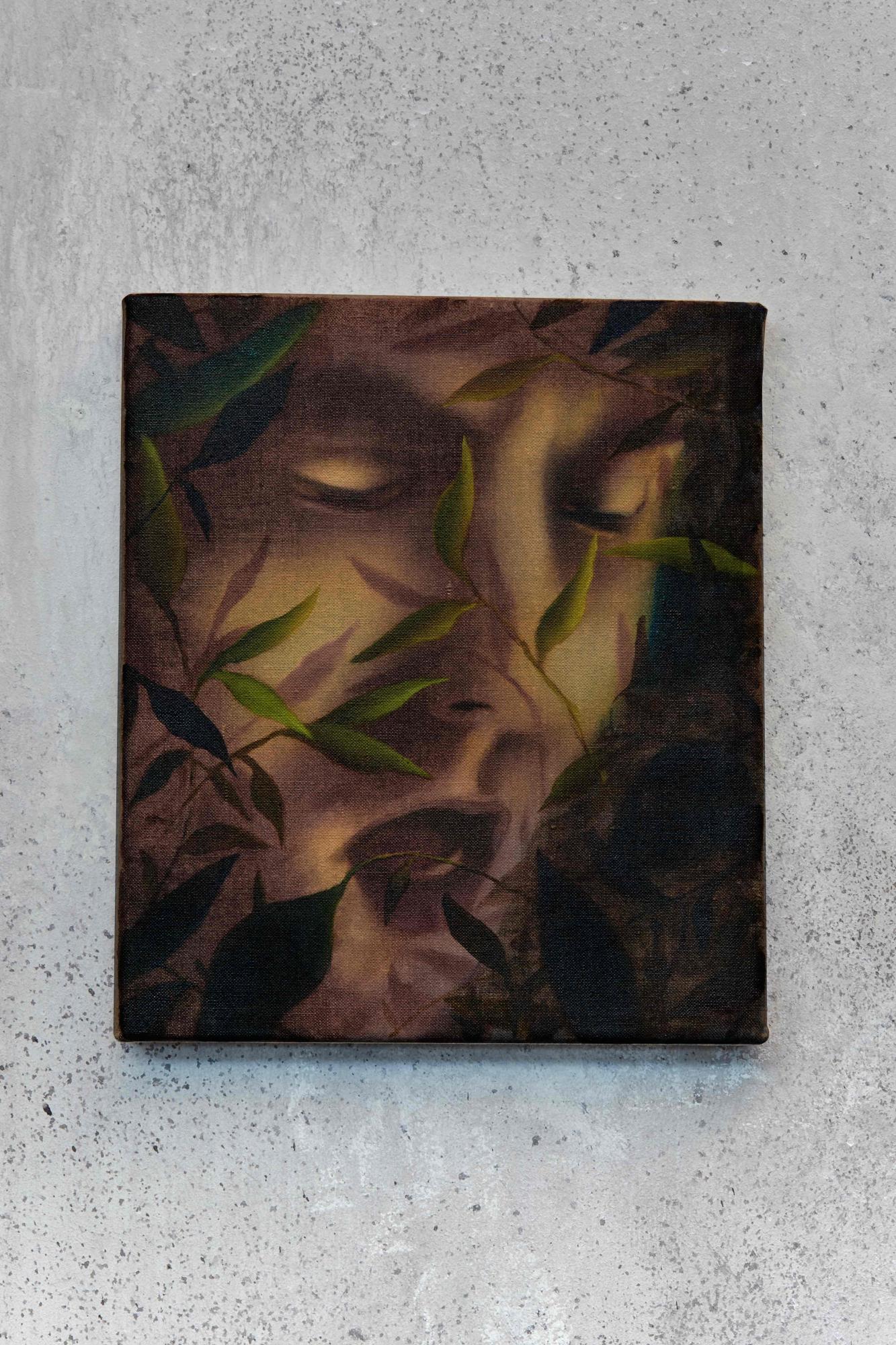
Cecilia De Nisco, Sneaky #1, 2023, oil on linen, 25 x 30 cm.
Photo: Studio Shapiro. Courtesy of the Artist and VIN VIN Vienna.
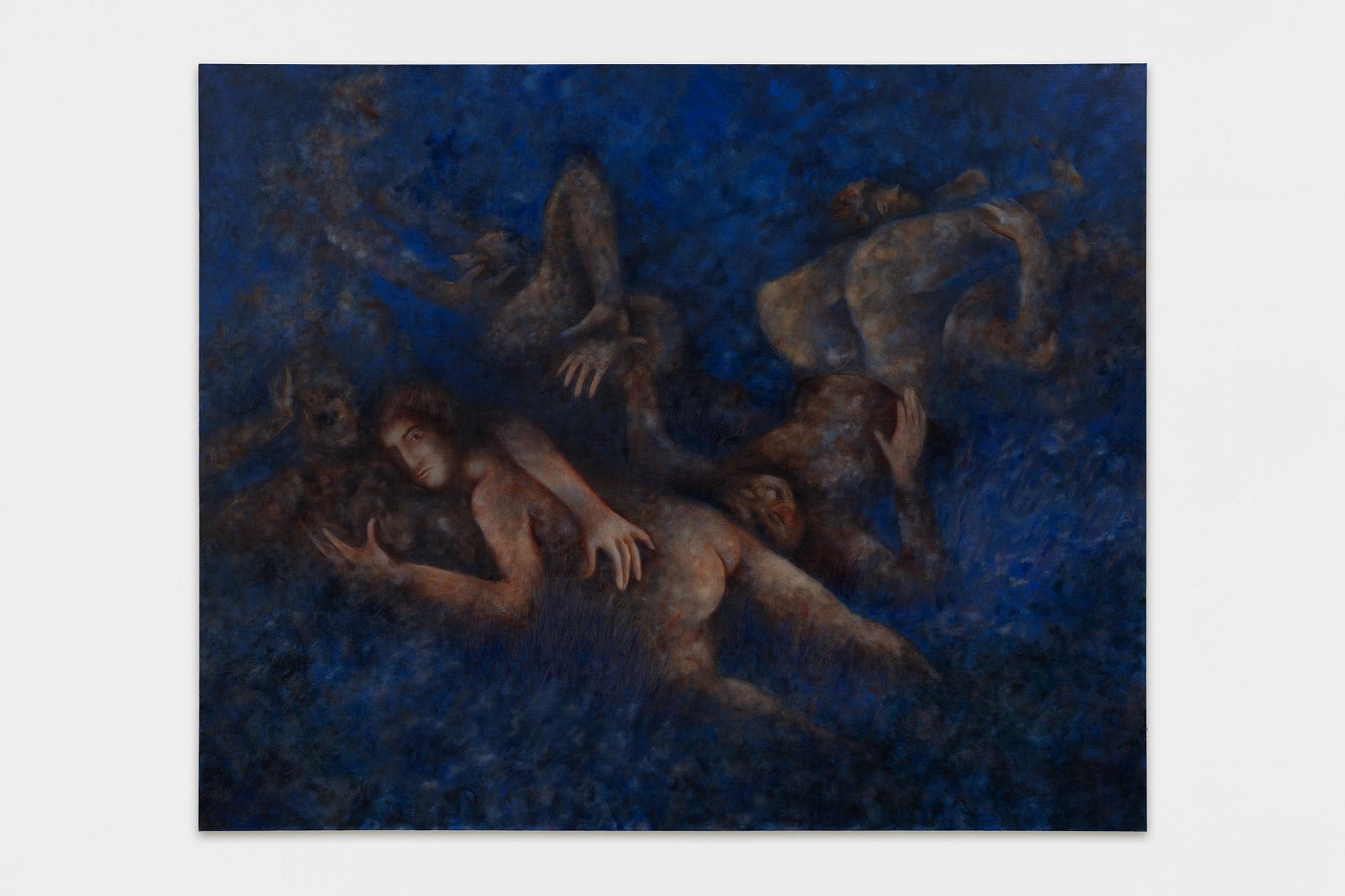
Cecilia De Nisco, Stavo cercando il tuo cuore lì dentro ma ho trovato solo latte, 2024, oil on linen, 210 x 170 cm
Photo: Simon Veres. Courtesy of the Artist and VIN VIN Vienna
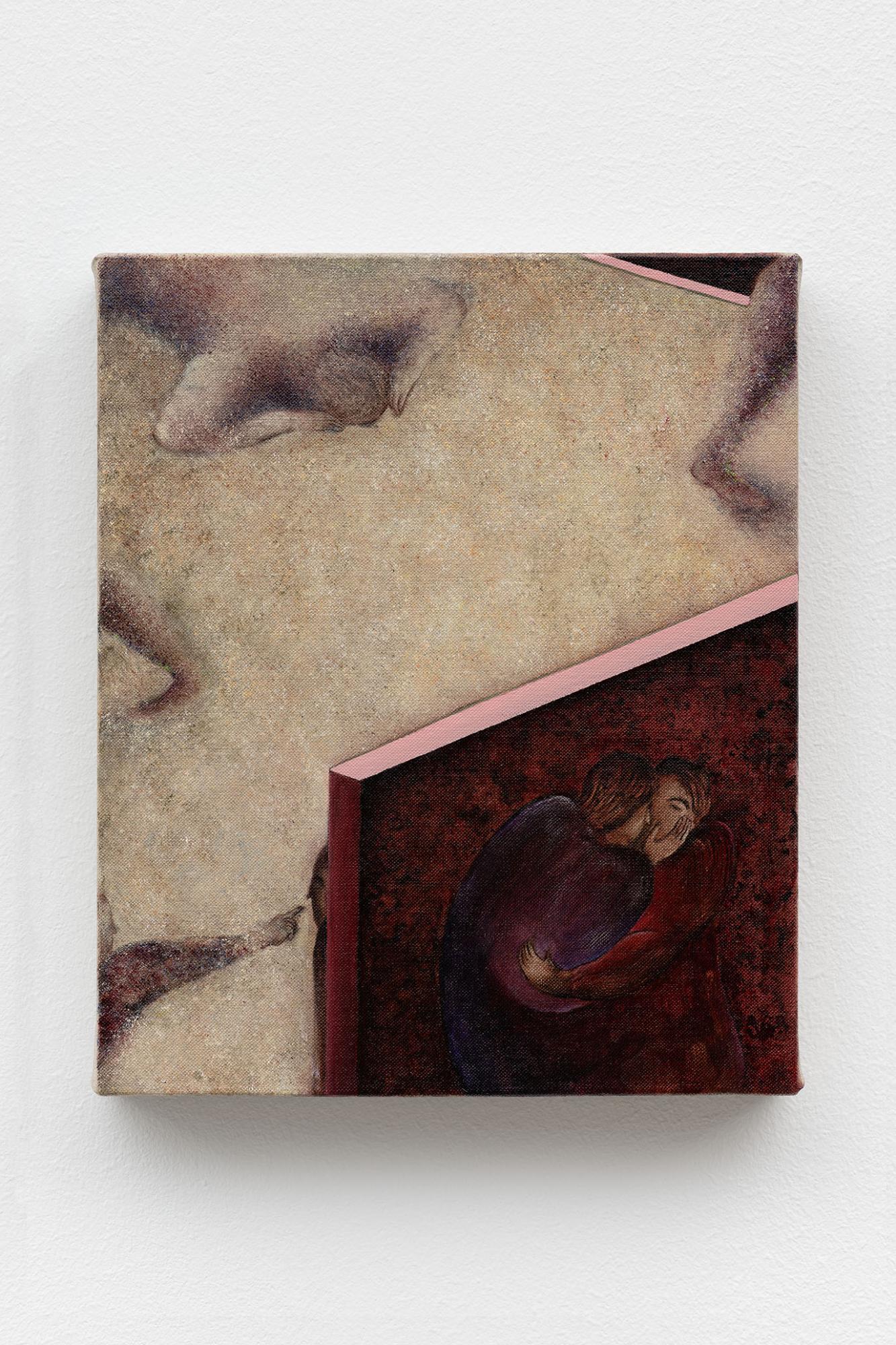
Cecilia De Nisco, Senza pretese, 2025, oil on linen, 25 x 30 cm
Photo: Simon Veres. Courtesy of the Artist and VIN VIN Vienna
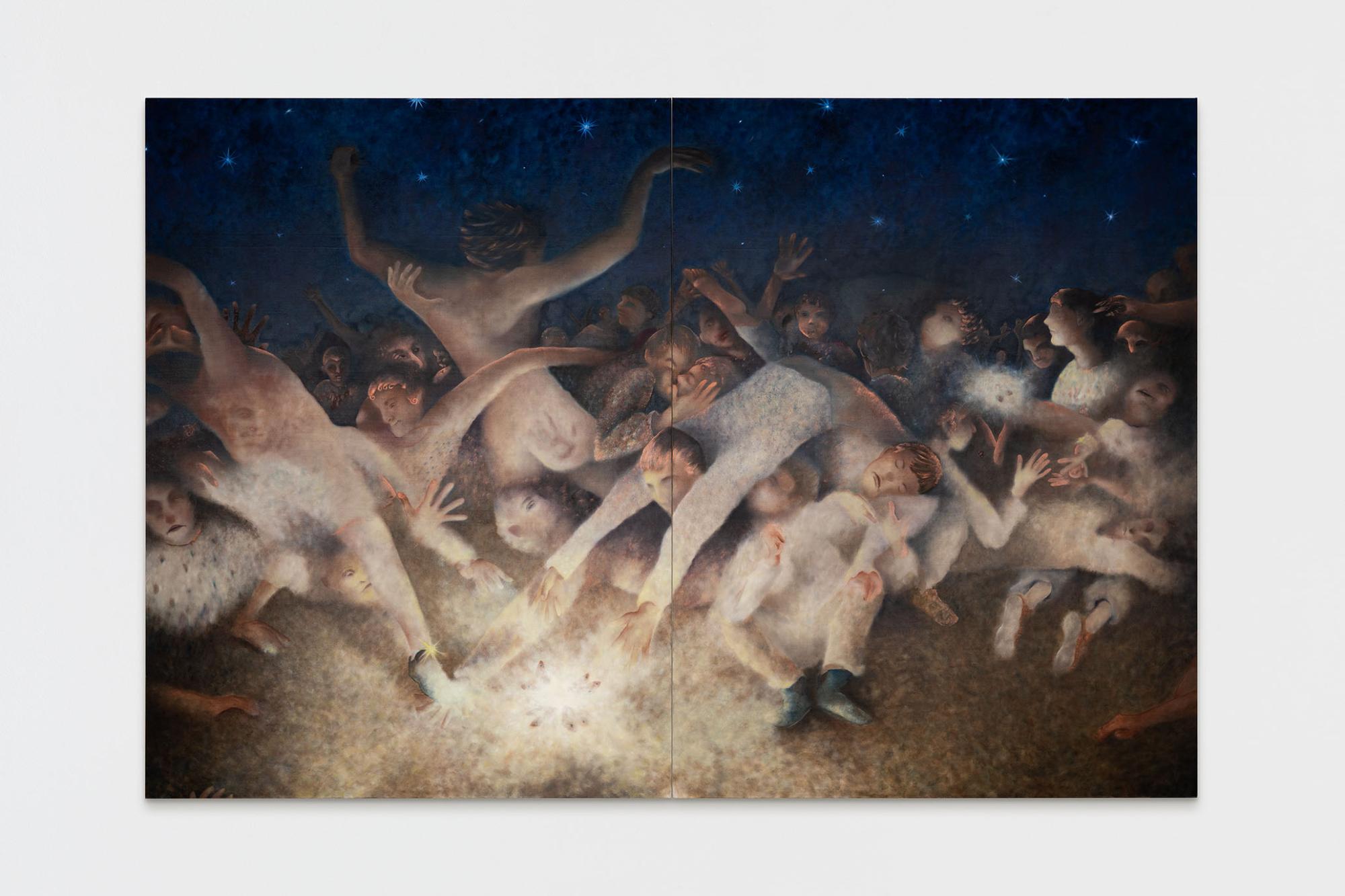
Cecilia De Nisco, The dance of the nocturnal butterflies, 2023, oil on linen, 360 x 240 cm
Photo: Simon Veres. Courtesy of the Artist and VIN VIN Vienna.
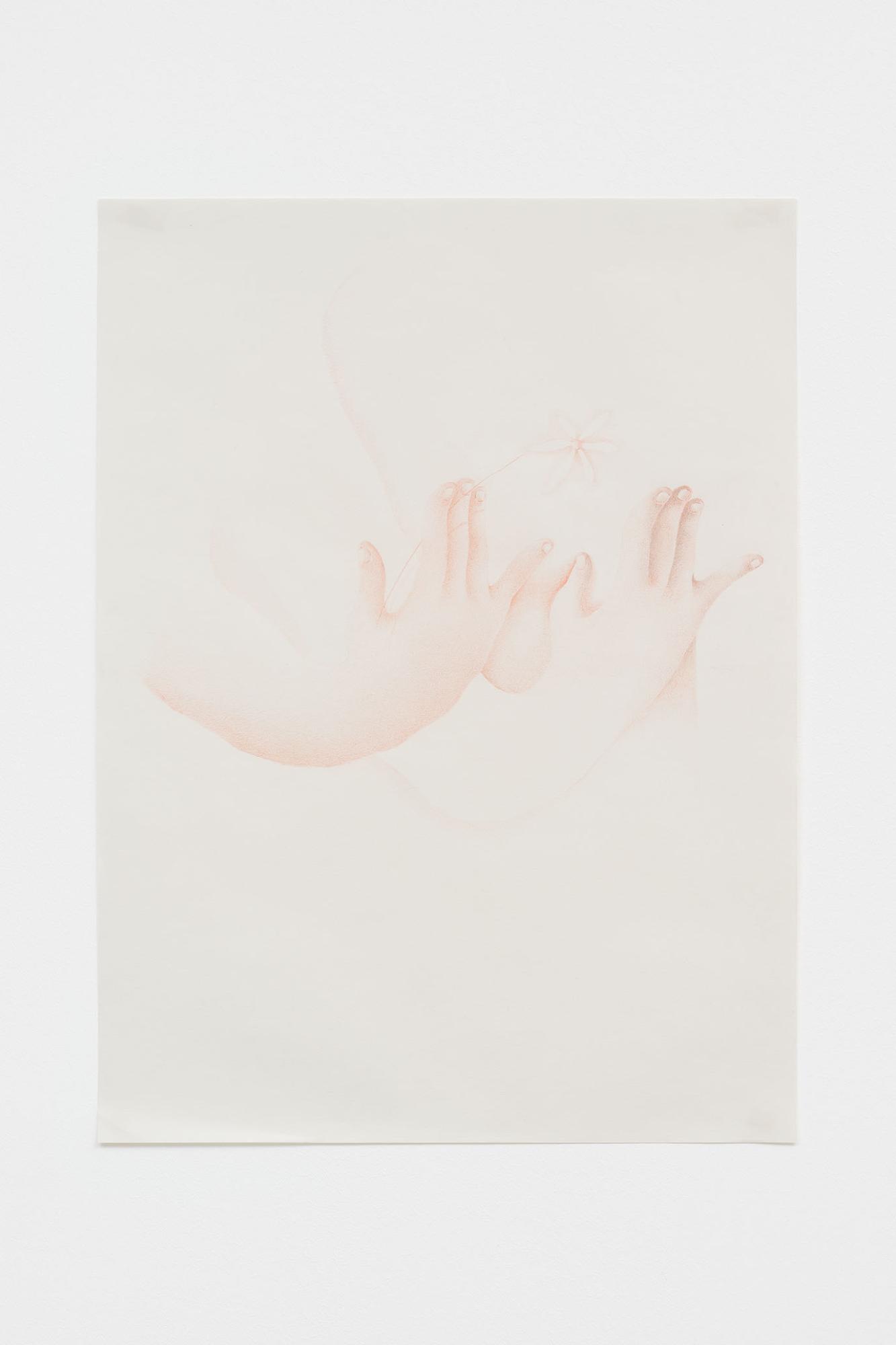
Cecilia De Nisco, Sketch for... #6, 2025, pastel on paper, 42 x 56,5 cm
Photo: Simon Veres. Courtesy of the Artist and VIN VIN Vienna.